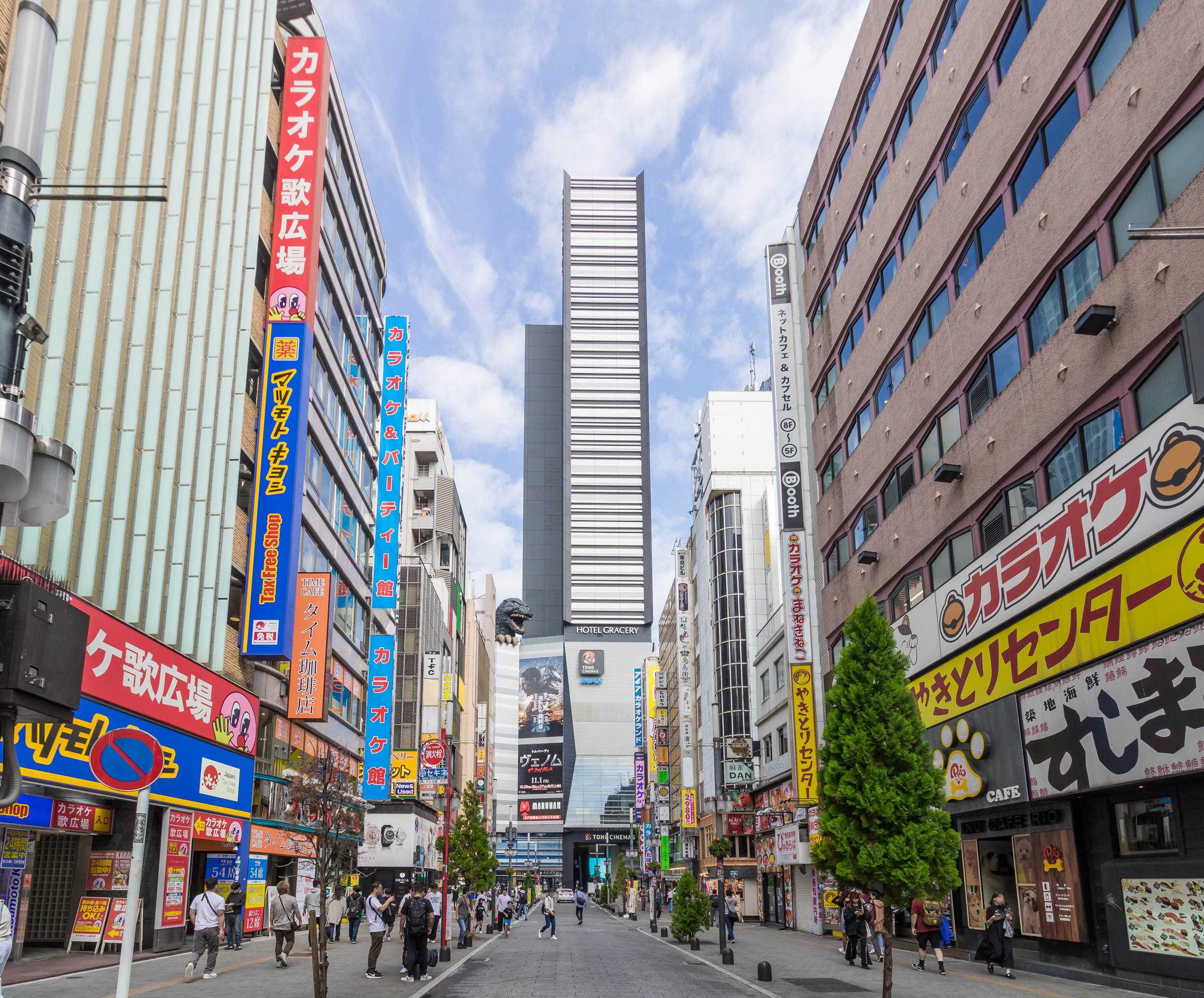
Look down Godzilla Road in Shinjuku’s Kabukicho district, and a familiar face appears above the buildings. Tokyo has Godzilla figures you can visit on foot, as well as places that have become part of the films. This journey connects Shinjuku and Hibiya with views from the Tokaido Shinkansen.
One of those views is the Tama River, where Japan’s Self-Defense Forces confront Godzilla in Shin Godzilla. The blue arches of Maruko Bridge are still there to spot from the train. Meet Godzilla in the city, then watch a piece of the film’s Tokyo pass your window.

01
Look up in Shinjuku
Your landmark is the Godzilla Head on the Shinjuku Toho Building, home to TOHO Cinemas Shinjuku and Hotel Gracery Shinjuku. The roughly 12-metre-tall figure stands on the eighth-floor terrace. Seen with the street and surrounding buildings, it feels as though Godzilla has just arrived in the city.
Planning your first visit
From Tokyo Station, take the JR Chuo Line Rapid to Shinjuku Station.
- Nearest station
- About a 5-minute walk from JR Shinjuku Station’s East Exit
- Landmark
- Shinjuku Toho Building / Godzilla Road
- Where to look
- Up from the street at ground level
- Performance
- Hourly from noon to 8 p.m., according to the official guide
Performance times and access arrangements may change. Check the official guide before visiting.
You do not need a hotel reservation or cinema ticket to look up from the public street. This is an easy way to meet Godzilla while exploring Shinjuku.
Keep the city in the picture
Before zooming in on the face, try a photograph that includes the street and building. The setting is part of the fun. Stop somewhere clear of passing pedestrians, and stay out of the road.
02
Meet another Godzilla in Hibiya
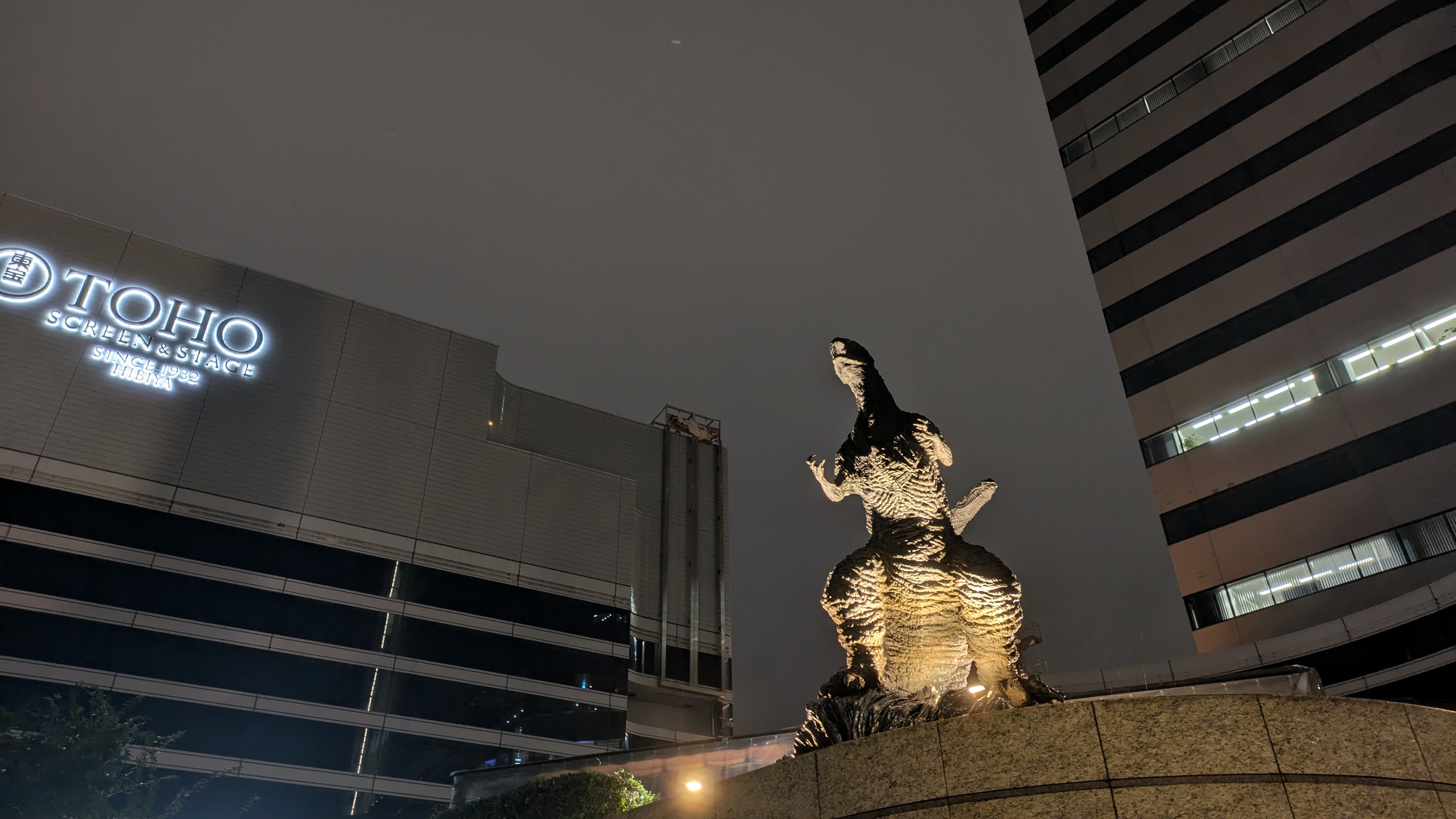
Photo: michikusa, September 2025
In Shinjuku, you look up at Godzilla. At Hibiya Godzilla Square, you can stand beside a statue and take a closer look. The nearest stations are JR Yurakucho and Hibiya subway station.
Hibiya is a district of cinemas and theatres. At night, lighting brings out the statue’s texture. After the wide street view in Shinjuku, this is a place to notice the face and dorsal fins.
If you are taking a Shinkansen from Tokyo Station, a walk towards Yurakucho can fit before or after your train journey. You can combine it with a meal around Yurakucho or a visit to neighbouring Ginza.
Find Hibiya Godzilla Square ↗Another figure inside the cinema
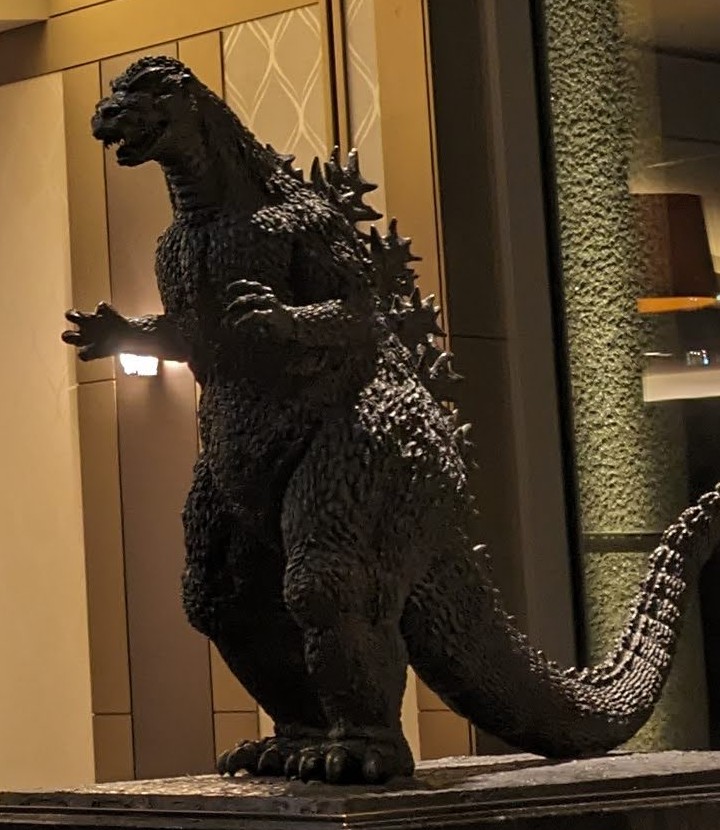
Photo: michikusa, April 2024
Listen for the theme at Hibiya Station
The connection continues underground. Since November 3, 2026, Hibiya Station on Tokyo Metro’s Hibiya and Chiyoda lines has used the Godzilla theme as its departure melody. Meet the statue above ground, then listen as you catch your train.
03
Watch Tokyo from the Shinkansen
Godzilla films have returned to Tokyo again and again. A broadcast in the original Godzilla (1954) names districts that still lie along the railway corridor:
“From Ginza Owaricho towards Shimbashi, Tamachi, Shiba and Shibaura.”
Our translation of dialogue from Godzilla (1954), as quoted in the TOKYO GODZILLAs official guide (Japanese).
Ginza, also attacked in Godzilla Minus One (2023), is an easy connection from your Hibiya walk. Once you board the Shinkansen, look for Tokyo Tower and, farther along the route, the Tama River.
Godzilla and the city’s trains
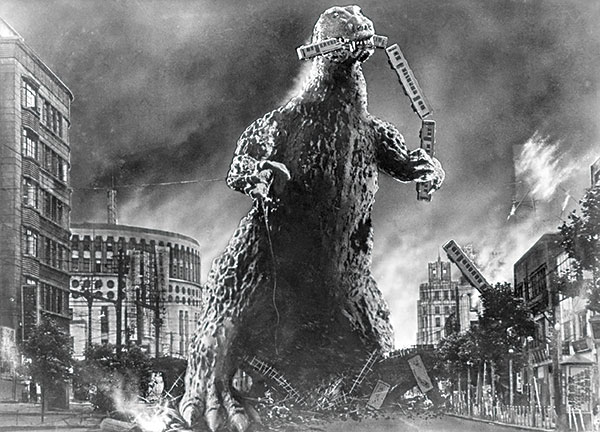
A train in Godzilla’s jaws makes the monster’s scale immediately clear. When Godzilla opened in 1954, the Tokaido Shinkansen did not yet exist. Godzilla’s connection with railways goes back to the trains of an earlier Tokyo.
Source: Fukuoka Art Museum, “ゴジラ展―大怪獣、創造の軌跡” exhibition (Japanese)
Find Tokyo Tower between the buildings
Between Tokyo and Shinagawa stations, red-and-white Tokyo Tower appears through gaps in the buildings on the E-seat side of ordinary cars. The tower is struck by Godzilla’s heat ray in Godzilla: Tokyo S.O.S. (2003) and is also destroyed in Godzilla Final Wars (2004). It is one of the landmarks that make the films’ Tokyo recognisable.
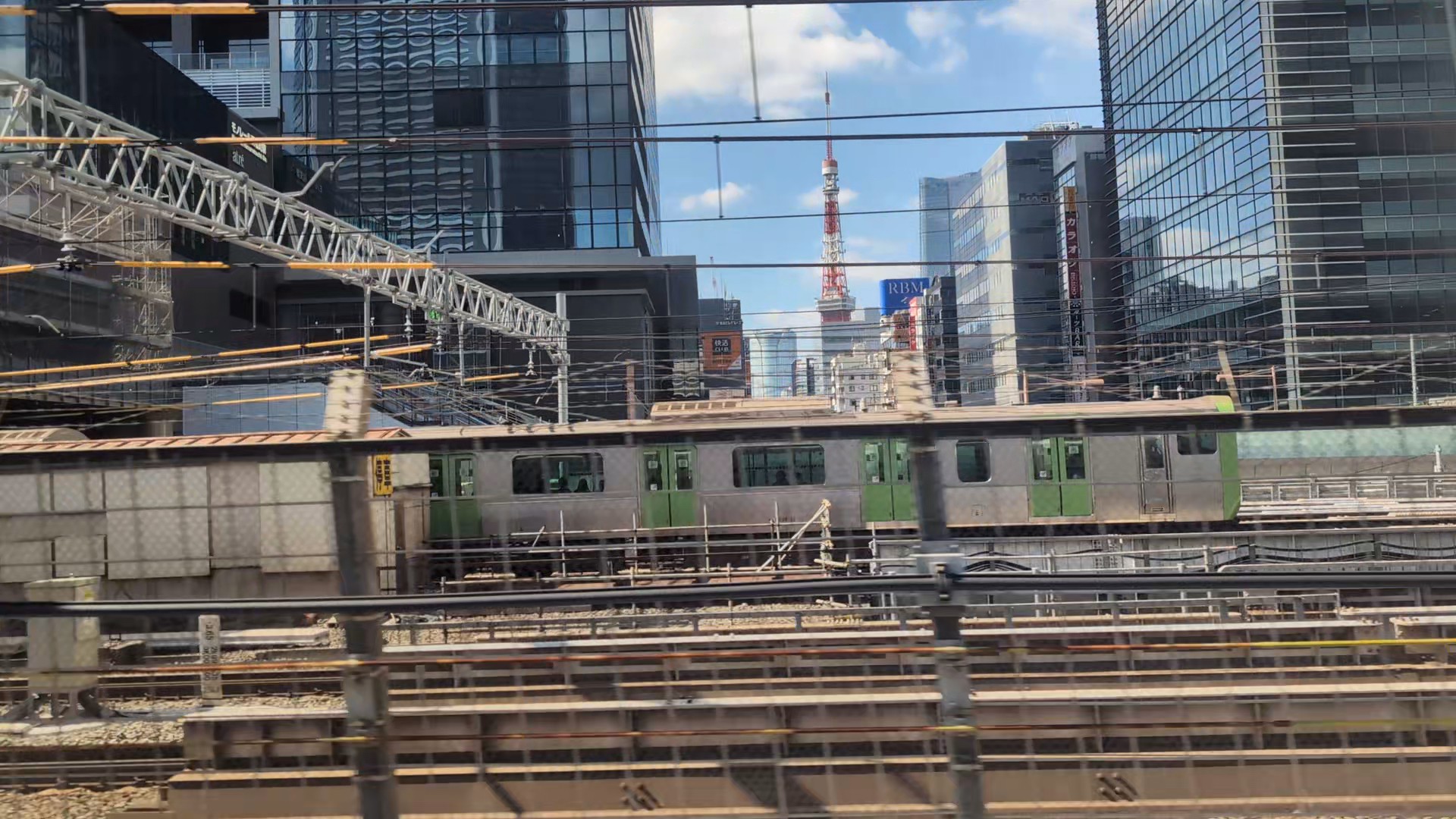
Photo: michikusa, October 2026
The view is brief. As the train moves on, the tower slips behind the buildings again.
Walk to the original landing place
In Godzilla (1954), Godzilla emerges onto land in Tokyo near the eastern end of Yatsuyama Bridge in Shinagawa, before attacking a train. It is another stop for tracing the monster’s connection with the railway.
Neither the Shinkansen nor Tokyo Tower existed then. The bridge has changed too: today’s pale green structure is the fourth bridge, rebuilt in 1985. Standing over the tracks gives you a place to imagine that earlier Tokyo, even though the present view differs from the film.
The Shinkansen enters Yatsuyama Tunnel beyond Shinagawa, so visit this bridge on foot before or after your train ride. It is about 9 minutes from JR Shinagawa Station or 4 minutes from Kita-Shinagawa Station on the Keikyu Line. You can continue your walk along the old Tokaido road.
04
Cross the river from Shin Godzilla
In Shin Godzilla (2016), Japan’s Self-Defense Forces confront Godzilla at the Tama River as it advances towards Tokyo. Maruko Bridge is caught in the battle, with part of its structure hurled towards the tanks. The riverbanks become a front line between the monster and the city.
Look at the bridge’s blue arches in the film, then compare them with the present-day view from the Shinkansen. The photographs face different directions, but the arches give you a recognisable landmark.
Maruko Bridge in the film
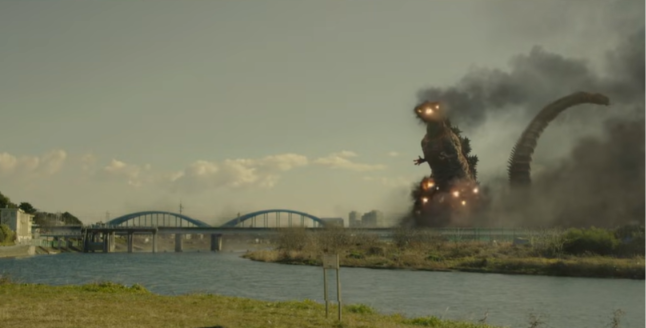
東宝MOVIEチャンネル / ©2016 TOHO CO., LTD.
Today, from the Shinkansen
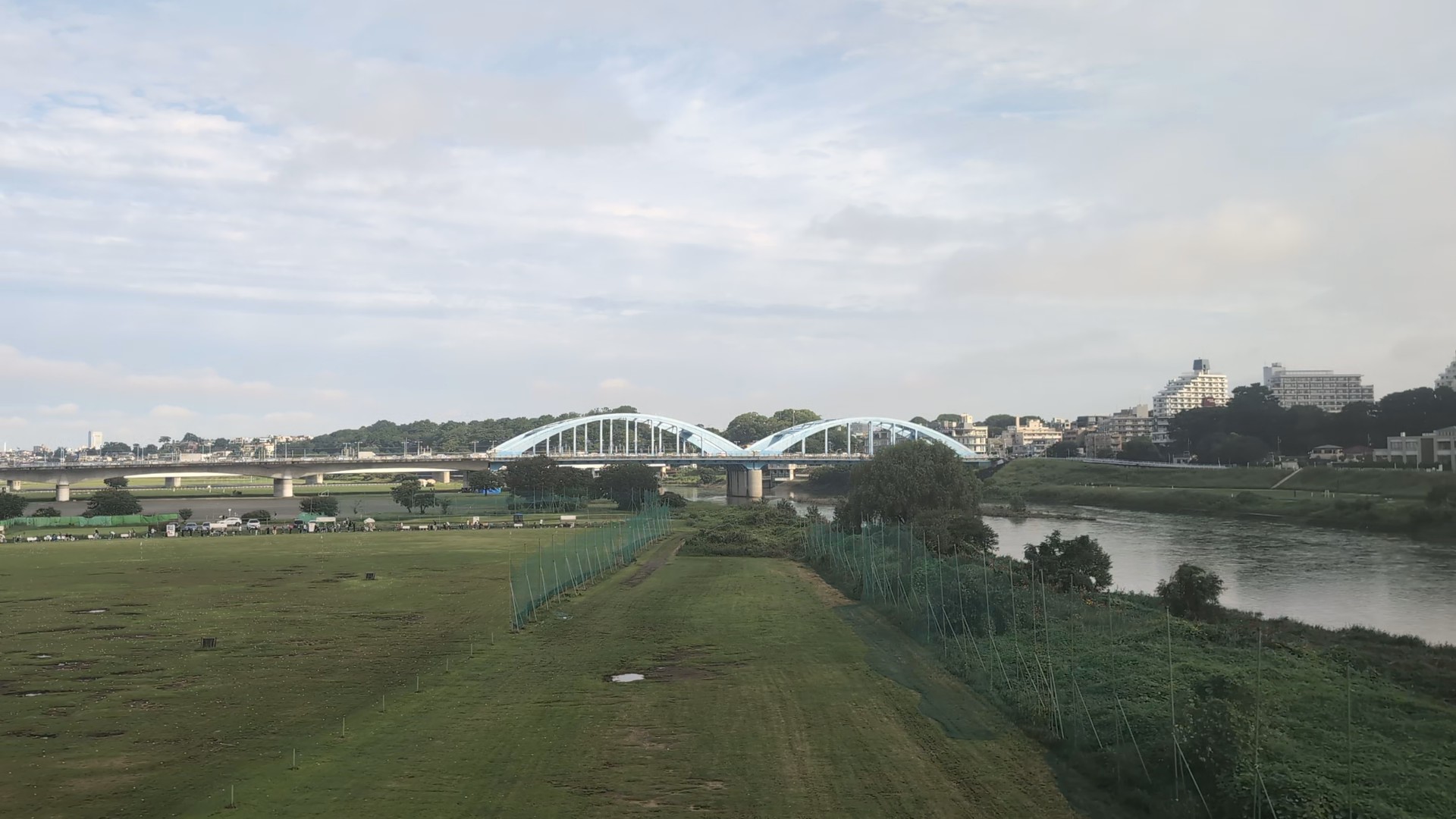
Photo: michikusa, September 2026
The Shinkansen crosses the Tama River between Shinagawa and Shin-Yokohama. Look from the E-seat side of an ordinary car for Maruko Bridge’s blue arches: the river and city as they are today, beyond the tension of the film.
The road bridge lies beyond the railway bridge you are crossing. Take in the river’s width and the high-rise buildings of Musashi-Kosugi beyond it. A place remembered as a battlefield on screen becomes part of an everyday journey.
05
Add a film to your Tokyo day
Godzilla Minus Zero opened in Japan on November 3, 2026. The photograph here shows a large display for the film at a Hibiya cinema in October 2026.
A screening and a walk through Shinjuku or Hibiya make another way to connect the films with the city. Check the individual screening’s language and subtitle information before booking.
Daimaru Tokyo’s 11th floor is scheduled to host “ゴジラ博 マイナスの世界,” an exhibition exploring the world of the Minus films. It may fit before or after a Shinkansen journey from Tokyo Station. Some entry periods require a timed ticket, and large bags such as suitcases are not allowed. Check the official admission details when planning your visit.
Exhibition information (Japanese) ↗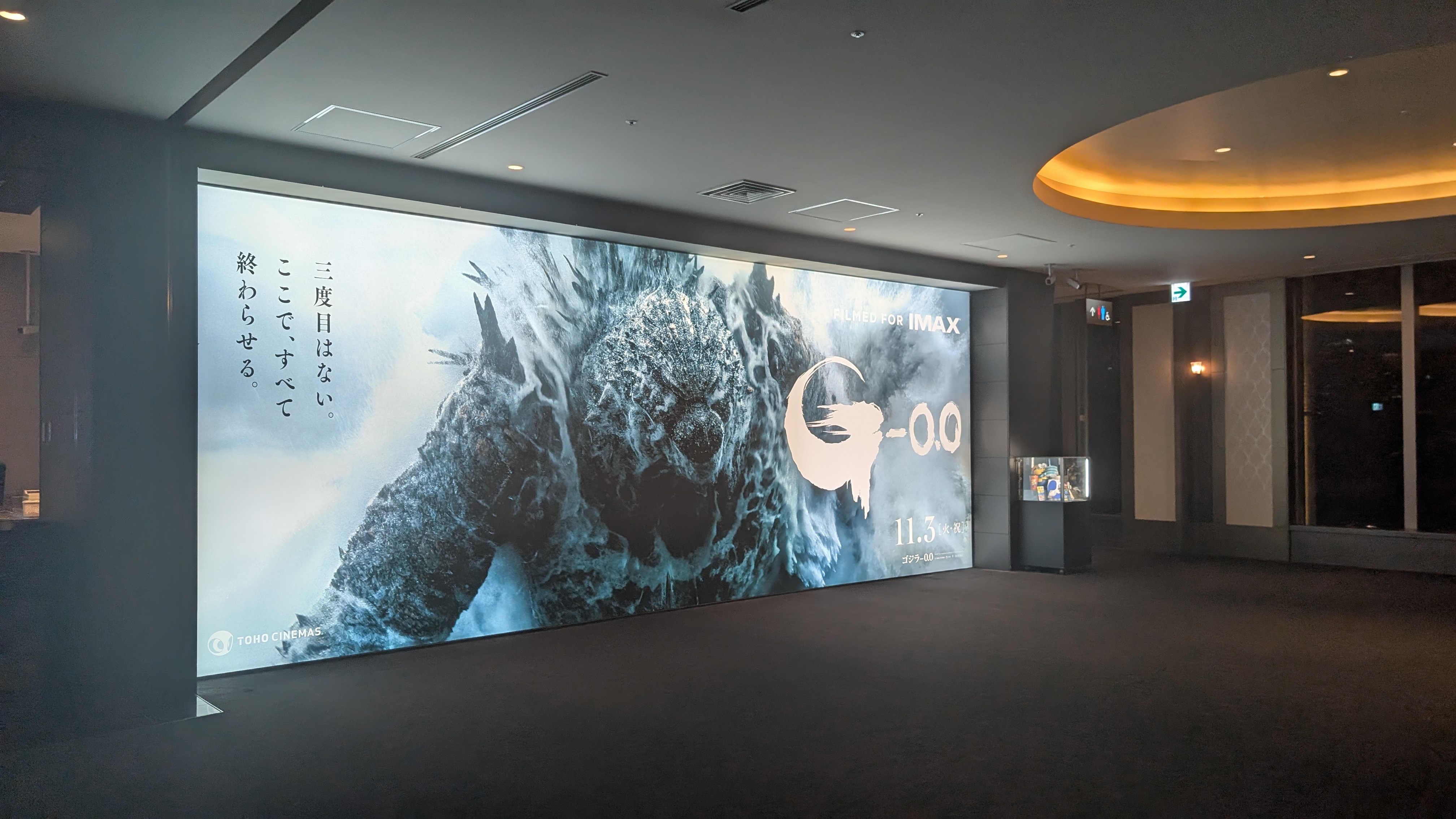
Photo: michikusa, October 2026
TM & © TOHO
Sources and photo credits
- Shinjuku Toho Building: Godzilla Head, performances and terrace access
- Tokyo Metro: Godzilla departure melody at Hibiya Station (Japanese)
- TOHO: Tokyo’s Godzilla Trail
- Ota City: film connections around Den-en-chofu (PDF, Japanese)
- Shinagawa Film Commission: the original Godzilla’s landing place (Japanese)
- Shinagawa Tourism Association: Yatsuyama Bridge (Japanese)
- Godzilla Minus Zero: official English film page
- Godzilla Minus Zero: official Japanese film site
- Daimaru Tokyo: “ゴジラ博 マイナスの世界” exhibition (Japanese)
- Tokyo Location Box: Tokyo Tower in the films
- TOHO: the Ginza scene in Godzilla Minus One
- 東宝MOVIEチャンネル: 『シン・ゴジラ』予告2 (official trailer, Japanese)
Shinjuku photo: Kakidai, October 2024, via Wikimedia Commons, licensed under CC BY-SA 4.0. Hibiya, Tokyo Tower and Maruko Bridge photos: michikusa. This is an unofficial travel article.
Shinjuku access, the Hibiya departure melody and exhibition admission conditions were checked on November 4, 2026. Other facility and Japan release information was checked on November 2, 2026. The official English title Godzilla Minus Zero was checked on November 5, 2026.