Official Disney+ Japan trailer.
Watch on YouTube (Japanese) ↗
If SHŌGUN left you curious about Toranaga, the historical figure behind him, or the Japan they inhabited, take that curiosity on your next train journey.
Between Tokyo and Kyoto or Osaka, the Tokaido Shinkansen passes through Sekigahara. Today you see houses, fields and mountains. In 1600, this area was the setting for a battle that helped shape Japan for centuries. A little history can change the view from your window.
01
From Toranaga to Tokugawa Ieyasu
FX’s SHŌGUN, first broadcast in 2024 and based on James Clavell’s novel, is set in Japan in 1600. Lord Yoshii Toranaga navigates a struggle for power; English navigator John Blackthorne, known as Anjin, arrives from abroad; and Toda Mariko moves between languages, loyalties and cultures.
Toranaga was inspired by Tokugawa Ieyasu, a real historical leader. Toranaga himself is fictional, however, and the drama’s conversations and relationships are not a biography of Ieyasu.
Who should you trust? When should you act? The questions that drive the drama offer a way into the real history of Sekigahara. This journey follows that historical connection; it does not present Sekigahara as a filming location.
This article starts with Season 1 of the FX adaptation. A separate expandable note in the train-window section discusses the season finale and is labelled for spoilers.
02
Why Sekigahara mattered
At the Battle of Sekigahara in 1600, Ieyasu’s eastern army defeated the western coalition associated with Ishida Mitsunari. In 1603, Ieyasu became shogun, Japan’s military ruler, and established his government in Edo, the city now called Tokyo. Tokugawa rule would last for more than 250 years.
- 1600Battle of SekigaharaThe eastern army wins, strengthening Ieyasu’s position.
- 1603The Tokugawa shogunate beginsIeyasu becomes shogun and establishes his government in Edo, now Tokyo.
- 1615The summer siege of OsakaThe Toyotomi family falls. Conflict had continued after Sekigahara.
The battle did not bring an immediate end to every struggle. Victory at Sekigahara, the founding of the shogunate and the consolidation of Tokugawa power were different stages. The conflict with the Toyotomi family continued until 1615.
You do not need to remember every commander or battle plan to enjoy this stretch of railway. Knowing why this place mattered gives the passing landscape another layer.
03
A place you pass through today
The Tokaido Shinkansen passes through Sekigahara between Gifu-Hashima and Maibara stations. This historical landscape lies along the route connecting Tokyo with Kyoto and Osaka.
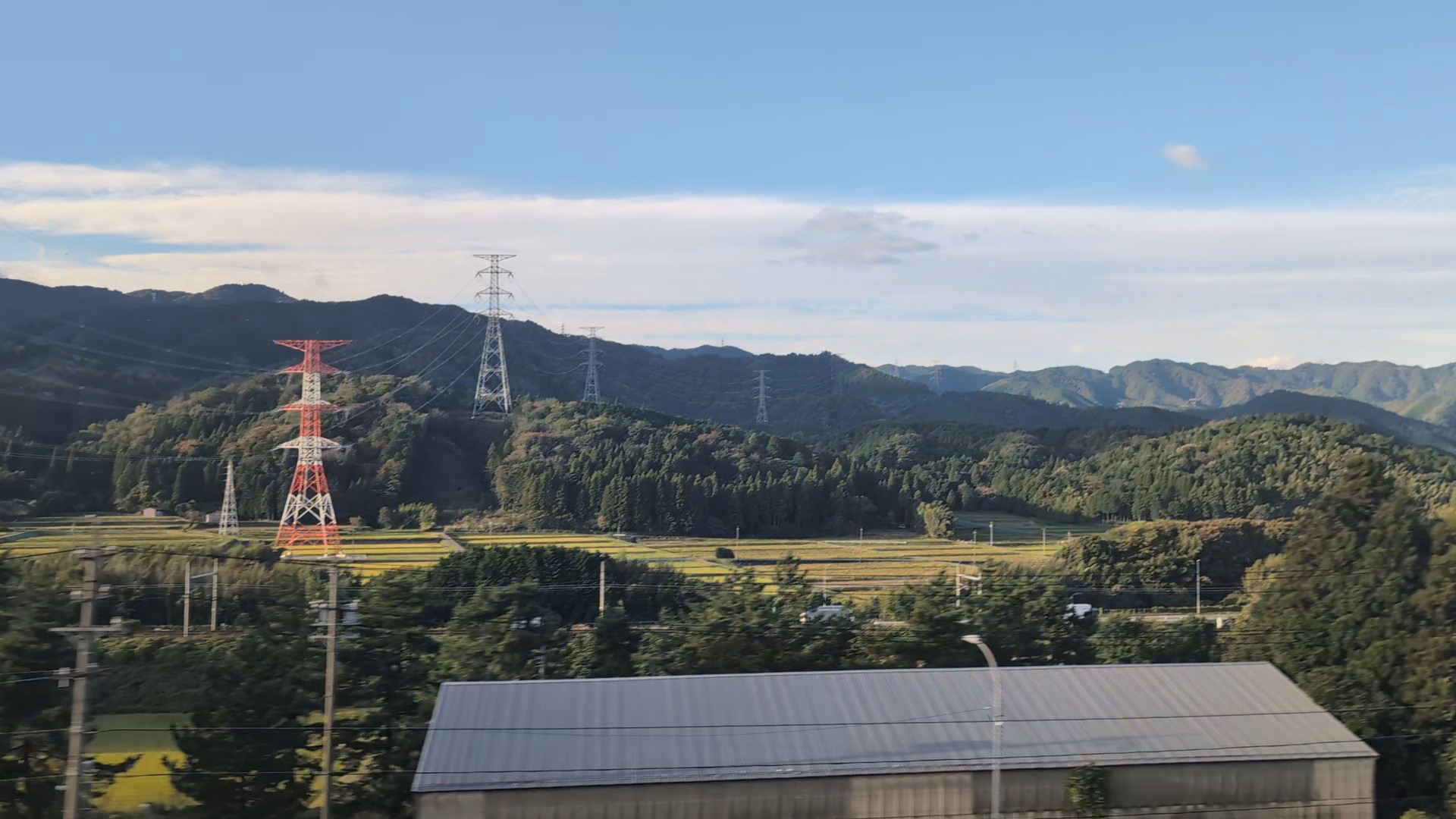
Photo: michikusa, November 3, 2026
Sekigahara in the story and todayContains spoilers for the Season 1 finale
FX’s official guide to Episode 10 explains how Toranaga foresees victory at Sekigahara. In the drama, the place represents the destination of his political manoeuvring. In the photograph above, today’s Sekigahara is a landscape of fields, homes and power lines beneath the mountains.
The connection is between a place you have imagined through the story and a place where everyday life continues. These are not matched “then and now” views, and the drama’s images are not evidence of Sekigahara’s actual terrain or filming locations.
Read FX’s Episode 10 guide (spoilers) ↗Start with the shape of the land: the town, fields and surrounding hills. Rather than trying to identify every former military position, look at the place as a whole. People live here, roads cross it, and your train is part of its present-day life. Recognising where you are can be enough to make the view memorable.
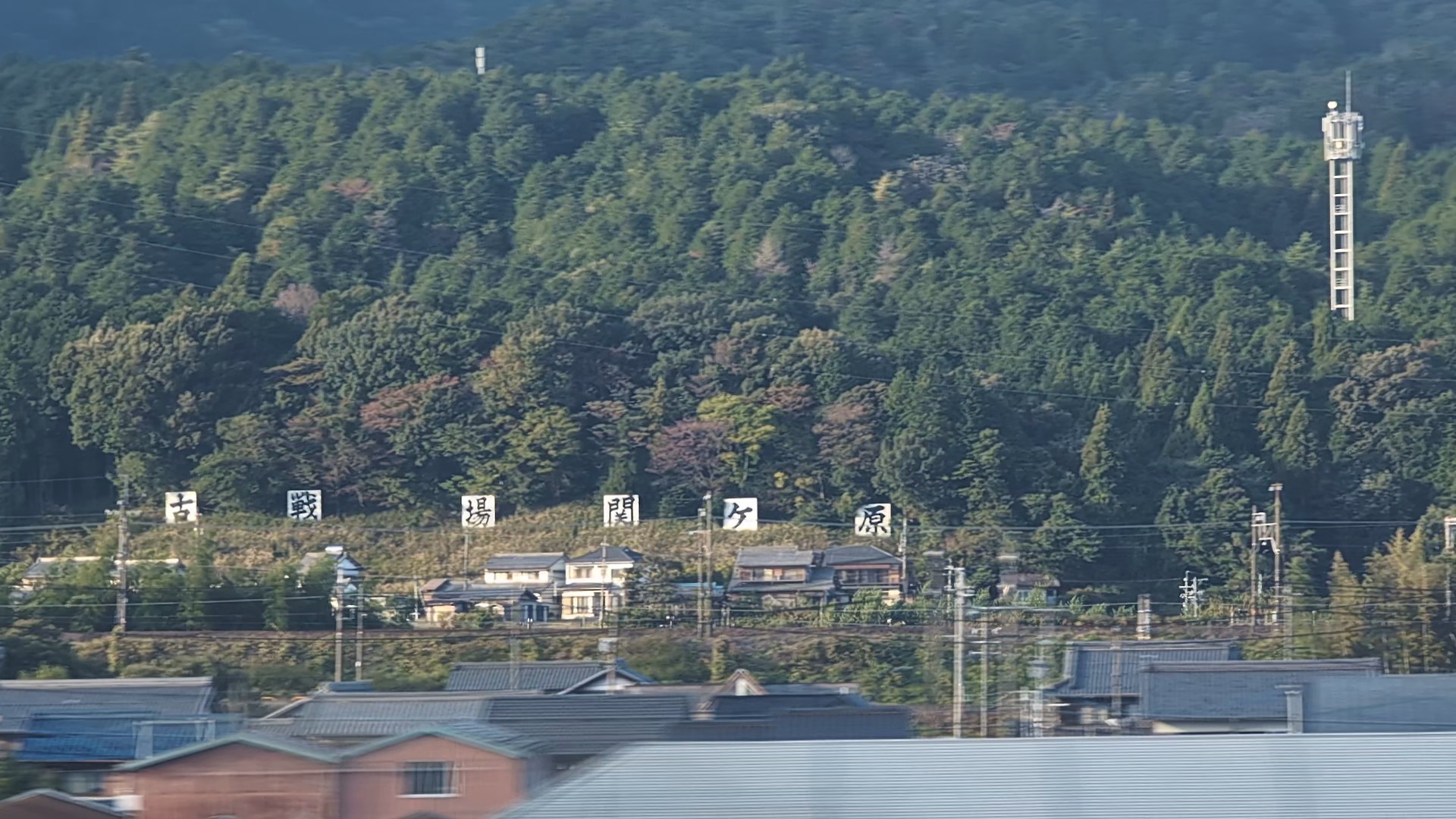
Photo: michikusa, November 3, 2026
What to watch for
- Section
- Gifu-Hashima–Maibara
- Seat side
- E-seat side in ordinary cars
- Landmark
- Large white battlefield sign
- Viewing time
- Roughly 10–20 seconds
The viewing time is an observation-based estimate and varies with speed and obstructions. Sekigahara Station is on the conventional railway; Shinkansen trains do not stop there.
The sign may pass before you are ready with a camera, so consider watching with your own eyes first. Our illustrated guide shows what to look for.
04
Step off the train and explore
If you have more time, visit from Sekigahara Station on the JR Tokaido Main Line. Change from the Shinkansen at Nagoya or Maibara, then continue by conventional train to Sekigahara. This is a separate stop to plan into your journey, rather than a station served by the Shinkansen.
The Gifu Sekigahara Battlefield Memorial Museum makes a useful starting point. Its exhibits introduce the battle and the positions of the opposing forces. Exploring the surrounding area afterwards gives those place names a sense of distance and scale.
Visitors with advance reservations have priority for the first-floor audiovisual exhibits. Check reservations, opening days and current admission information on the official website before travelling.
A glimpse from the window and a walk through the area are both ways to get to know Sekigahara. Choose the one that fits the time you have.
From Toranaga to Ieyasu, and from a drama to a real landscape: the next time you travel between Tokyo and Kyoto or Osaka, this stretch of the route may mean a little more.
Sources, the drama and photographs
- ディズニープラス公式: 『SHOGUN 将軍』予告・侍スピリット篇 (official trailer, Japanese)
- FX: Episode 10 guide (season-finale spoilers)
- Disney: characters and their historical inspirations (Japanese; spoilers)
- FX: timeline and historical background
- Japan National Tourism Organization: Sekigahara
- Gifu Sekigahara Battlefield Memorial Museum: visitor guide
- Museum notices and current admission information (Japanese)
Fictional settings, historical events, character inspirations and filming locations are distinct. This unofficial travel article follows an interest in SHŌGUN to a place in Japanese history; it does not identify Sekigahara as a filming location.
Photos: michikusa, stills from train-window video recorded on November 3, 2026. They show the present-day area around Sekigahara, not scenes from the drama.