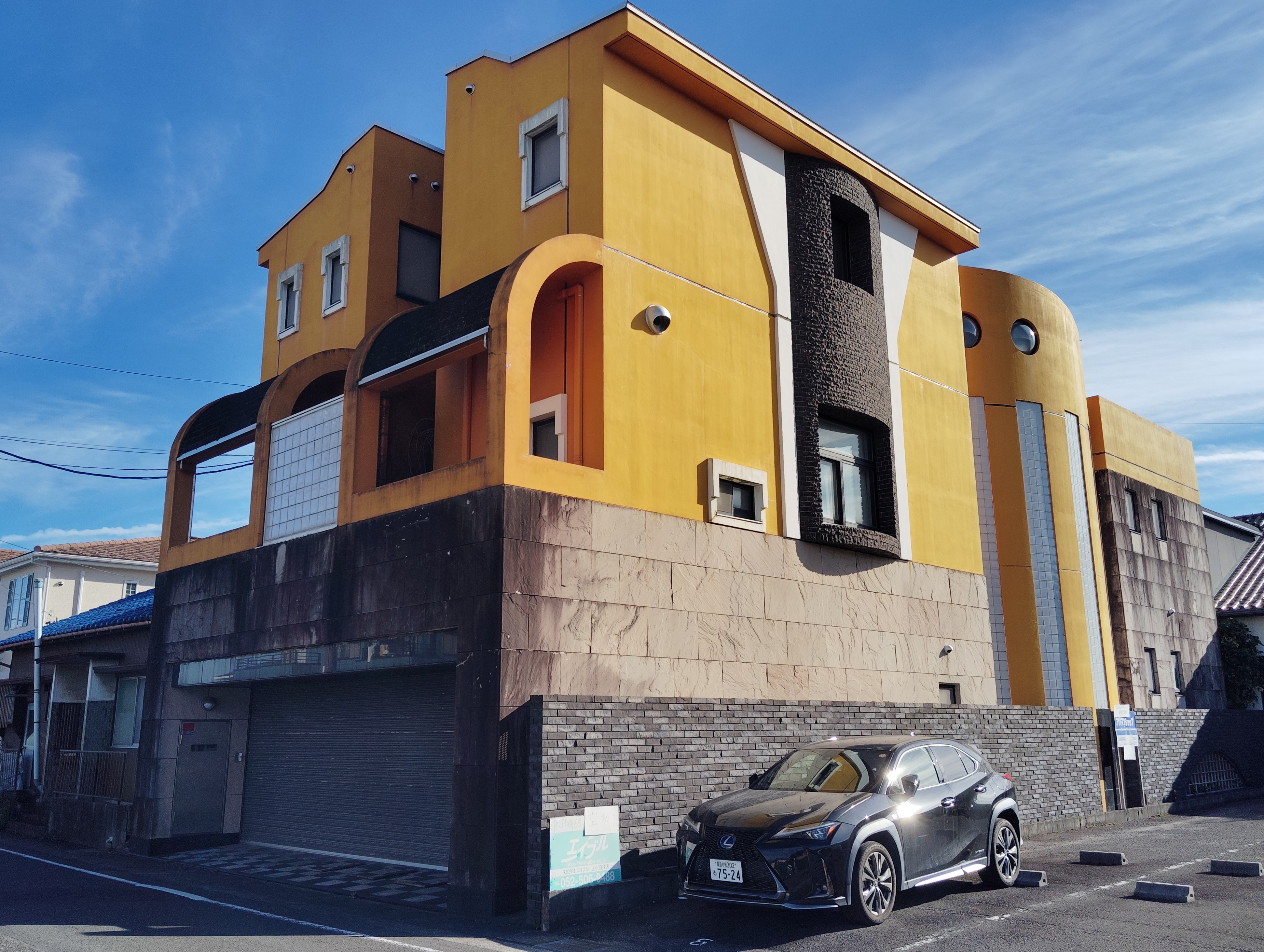

Goku's adventures take him far beyond Earth. The artist who imagined them, Akira Toriyama, lived in Kiyosu, a town near Nagoya in Aichi Prefecture. He spoke with his Tokyo editor every day and found ideas in the things he loved. Following that connection to Kiyosu brings a different story into view: the work and everyday life behind a manga known around the world.
01
Why he stayed close to home
Kiyosu was Toriyama's home, the place where he was born and grew up. Even after becoming famous, he did not move to Tokyo, where his publisher was based.
A 1995 interview in Weekly Playboy offers a glimpse of his reasons. According to a later article in Nikkan Cyzo that recounts the interview, Toriyama said he disliked crowds, had no desire to move to Tokyo and was not keen on living alone. Our reading is that staying was less a grand statement about working outside the capital than a way of living that suited him. [1]
Working from his hometown did not mean creating in isolation. His relationship with the editorial office in Tokyo was close, sustained by frequent conversation.
02
A local studio, a daily phone call
Kazuhiko Torishima discovered Toriyama's talent and edited both Dr. Slump and Dragon Ball. Looking back on their 13 years working together, Torishima said he called every single day. Even a short conversation could tell him how Toriyama was feeling and what had caught his interest. [2]
In a public university lecture, Torishima described the routine during the serialization of Dr. Slump: Toriyama drew 15 pages each week with one assistant, then sent the original pages to Tokyo by air. Long before sending digital files became everyday practice, this was how his local studio stayed connected to the publisher. [3]
03
Kung fu films and the next idea
One of the ideas that led to Dragon Ball grew out of an ordinary conversation at work.
As Torishima recalled it, they were looking for a new work to follow Dr. Slump. He had travelled to Nagoya for a meeting, but a promising idea was proving elusive. With the departure of his Shinkansen home approaching, Toriyama's wife mentioned her husband's habit of watching films while drawing. [4]
The films he watched over and over were Jackie Chan's kung fu movies. Torishima suggested turning that enthusiasm into a manga. The result was Dragon Boy, a work that would lead towards Dragon Ball.
From his hometown studio, Toriyama enjoyed a wider world through films, then made something of his own from what delighted him. That creative time is part of the connection worth remembering as you pass through Kiyosu.
04
His own words, kept locally
The December 2018 issue of Kiyosu City Library's newsletter contains an interview with Toriyama himself. An exhibition of work by his former assistant Takashi Matsuyama prompted the conversation.
Here was someone who was often too busy to go out and preferred sleep when he had time to spare. He also spoke of his love of model building. His answer that he always worked with just one assistant during serialization gives a sense of the small team behind those weekly pages. [5]
In the same interview, he said that Penguin Village in Dr. Slump had no real-life model. Living in a town and using it as the setting for a manga are different things. Reading his words offers a way to get to know Kiyosu through the person who lived there, without trying to match every local view to a fictional scene.
Read Toriyama's interview in the library newsletter (Japanese PDF, pages 2–3) →
05
Remembering the place where he worked
On November 3, 2026, the Mainichi Shimbun reported that demolition work had begun in October on the Kiyosu building Toriyama had used as his home and workplace. As of that report, most of the building had been taken down. His former assistant Takashi Matsuyama recalled that many works had been created there. [8]
06
From Goku's adventures to Kiyosu
Dragon Ball begins with Goku and Bulma searching for mysterious orbs, then grows into a story of training, friendship and formidable opponents. First serialized in 1984, it has reached readers and viewers around the world through manga, anime and films. [6]
One of Toriyama's contributions to Kiyosu was a logo for the city's 20th anniversary. A plaque bearing the design is displayed in the elevator lobby on 2F of Kiyosu City Hall's West Building. If you plan to visit, check the weekday opening hours of 9 a.m.–4 p.m. and closure dates, including public holidays. [7]
When Kiyosu Castle appears outside your Shinkansen window, it can bring this other connection to mind: the artist who lived in the same town. A name on the route near Nagoya becomes the place where a familiar story was created, amid phone calls, films and ordinary working days.
Sources and image credits
- Nikkan Cyzo: Toriyama's remarks in the January 31, 1995 issue of Weekly Playboy (Japanese). We have not checked the original magazine, so the remarks are attributed through this later account. The suggestion that local life suited his temperament is our interpretation.
- Engineer Type: interview with Kazuhiko Torishima about 13 years of daily calls (Japanese)
- Digital Hollywood University: Torishima's public lecture on the weekly production routine and delivery of original pages (Japanese)
- ITmedia: Torishima on the idea behind Dragon Ball's predecessor (Japanese)
- Kiyosu City Library newsletter, December 2018, pages 2–3 (Japanese PDF)
- Dragon Ball Official Site: about the series (English)
- Kiyosu City: commemorative plaque and City Hall guide (Japanese) / City Hall access and opening hours (Japanese). Checked November 4, 2026.
- Mainichi Shimbun via Yahoo! News: 「ドラゴンボール」聖地に別れ 鳥山明さんの仕事場解体へ 愛知 (Japanese), November 3, 2026.
Office photograph: Asturio Cantabrio, November 2025. From Wikimedia Commons, under CC BY-SA 4.0. Unmodified. This is an independent travel article and does not imply official endorsement or affiliation.
Sources and image information checked November 5, 2026.