WHY THEY ARE HERE
The line and the castles follow the same road
Highways, river crossings, open plains: the places chosen for castles are the places the railway later chose too.
Somewhere between the cities, a white tower rises above the rooftops beyond the bullet train window, holds for a few seconds, and is gone. That is a castle. The part you see is the keep, called tenshu: a wooden tower on a high, curving base of fitted stone, once ringed by moats, gates and lesser turrets. It was not a stone house to live in, as in Europe, but the seat of a daimyo, the lord who governed the province around it, with a town grown up below its walls.
Castles were placed where people and goods already moved: post towns on the old highways, the fords and ferries of the big rivers, hills with a view across the plain. The road between Edo, now Tokyo, and Kyoto or Osaka was the one the shogunate watched most closely, and castles stand along it one after another.
The railways built from the 1870s on chose the same ground for the same reasons: easy gradients, the simplest river crossings, and the towns where people already were. Those castle towns became the station cities, and the Tokaido Shinkansen runs along much the same corridor as the old highway. The castles at the window are not a coincidence.
The tower itself is often not the old one. Many keeps were dismantled after 1873, when the new government ordered most castles abandoned, and others burned in the air raids of 1945; concrete reconstructions followed in the postwar decades. The stone bases beneath them are usually original, and where no tower was rebuilt, what remains is the shape of the hill and its walls.
From the train each castle lasts between a few seconds and a dozen. One stands right beside the track, another is a speck on a distant summit. Knowing which side of the carriage to watch is most of the work.
KEEPS
Look for keeps and turrets
From a keep beside the tracks to a tiny point on a summit, in order from Tokyo.
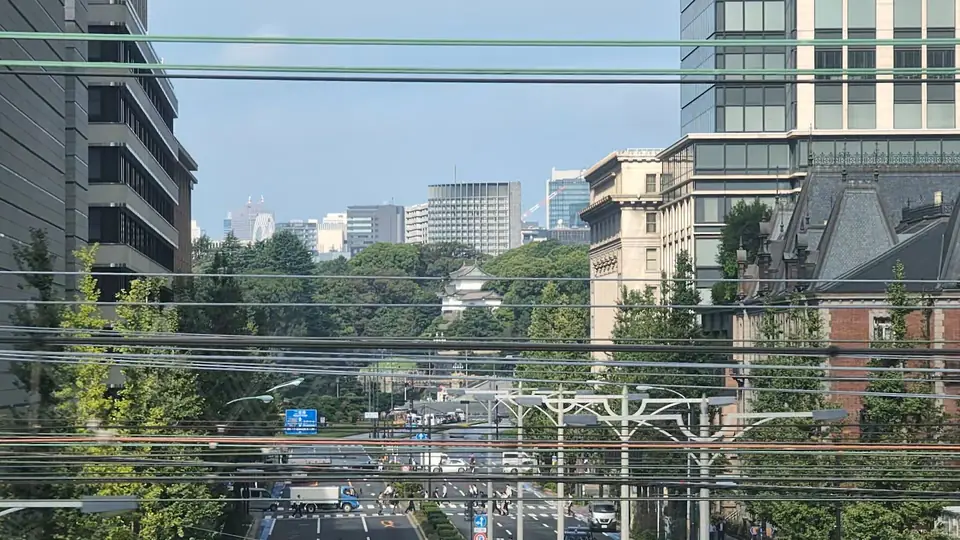
Edo Castle's Fujimi Turret
An Edo Castle turret before Tokyo
Just before Tokyo Station, look through gaps in the buildings on Seat E for the white walls and layered roofs of Fujimi Yagura. This is a turret of Edo Castle within the Imperial Palace grounds.
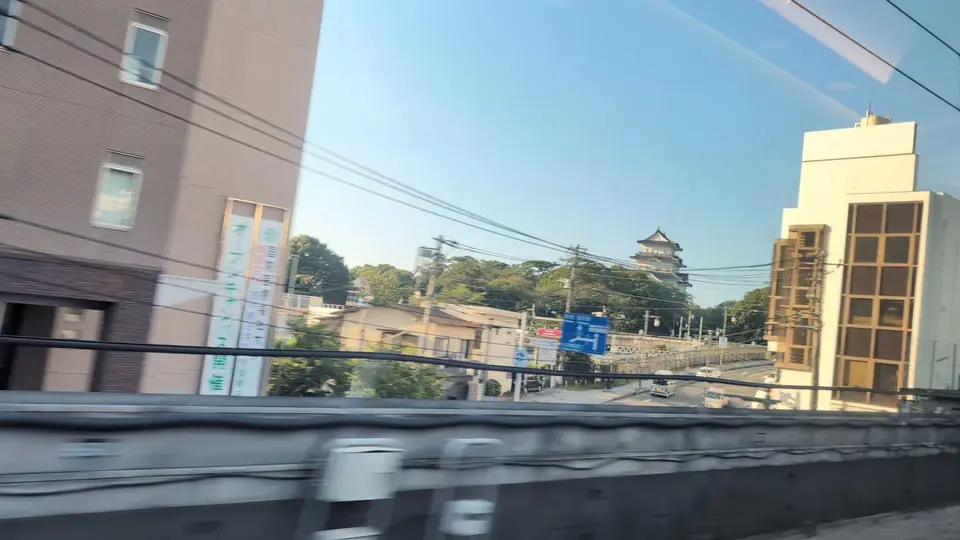
Odawara Castle
A white keep near the station
Watch Seat A near Odawara Station. A white keep appears beyond the buildings, briefly: start watching before you reach the station.
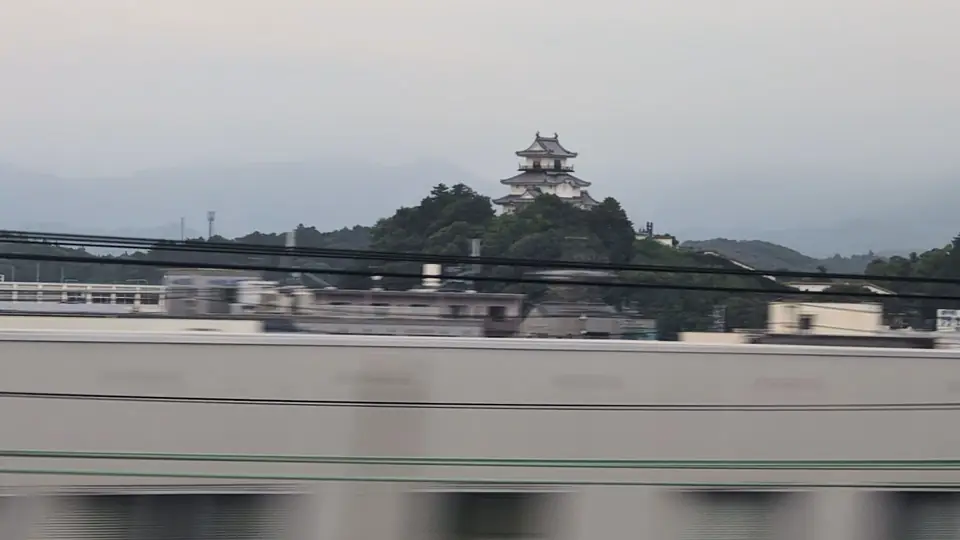
Kakegawa Castle
A brief glimpse on the hill
Near Kakegawa Station, look for the keep on a low hill on the Seat E side. From a Nozomi, the glimpse is brief; look for its layered roof.
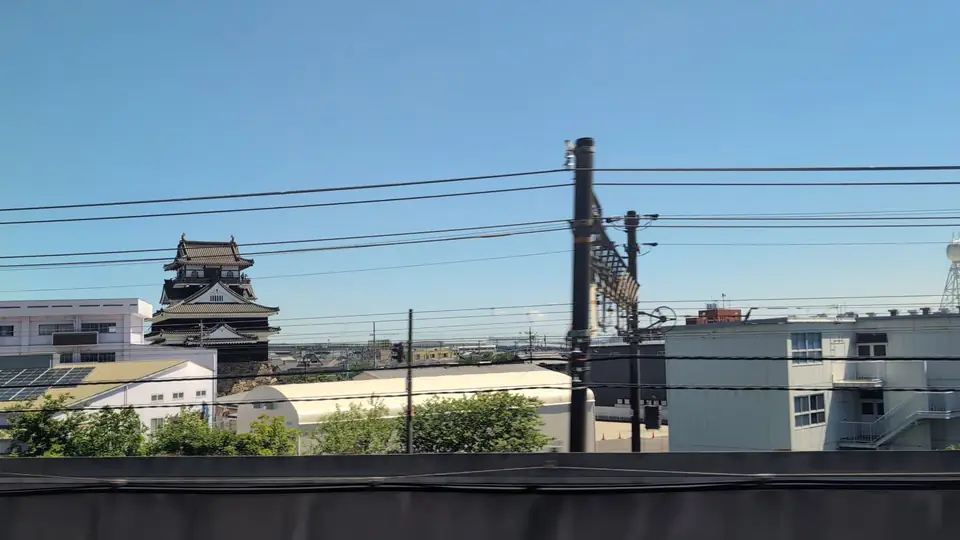
Kiyosu Castle
White and vermilion by the tracks
Between Nagoya and Gifu-Hashima, Kiyosu Castle stands close to the Seat E side. Its white and vermilion keep and red bridge make this a good first castle to look for.
Gifu Castle
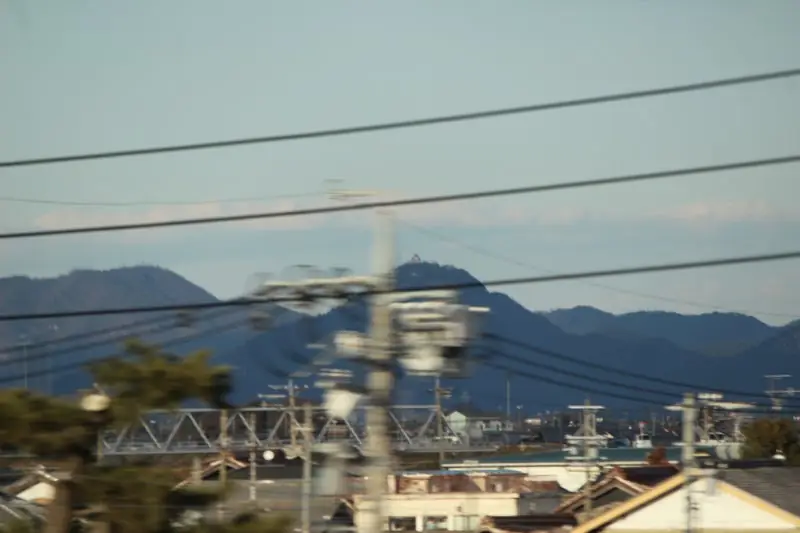
A tiny point on the summit
Between Gifu-Hashima and Maibara, Mount Kinka lies far away on the Seat E side. Gifu Castle is a tiny point on its summit: a difficult view best attempted in clear air.
Hikone Castle
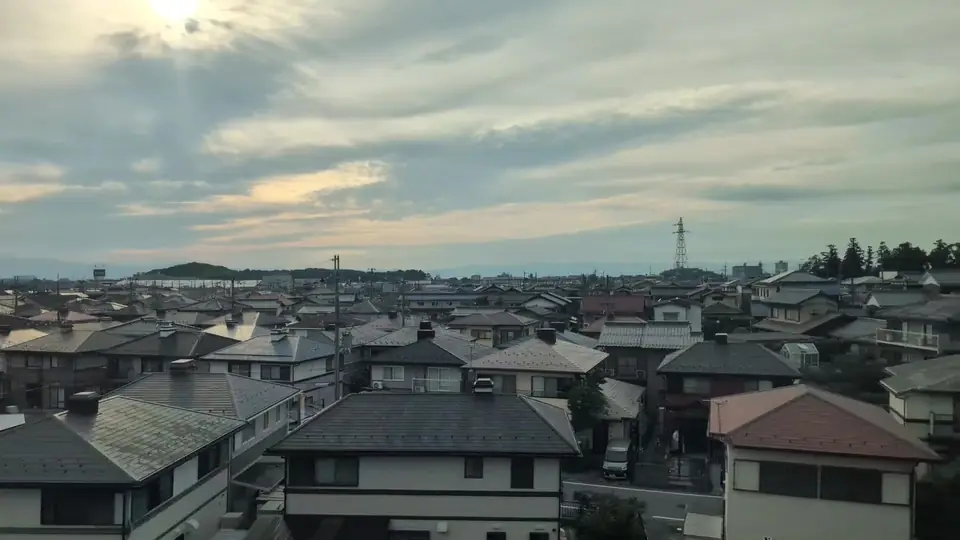
A white keep beyond the town
Between Maibara and Kyoto, look for a small hill beyond the town. The keep is distant and very small. Use the photographs to locate the hill before trying to spot it.
CASTLE HILLS
Where only the hill remains
The buildings are gone, but the hills where the castles stood still pass the window.
Sawayama Castle Ruins
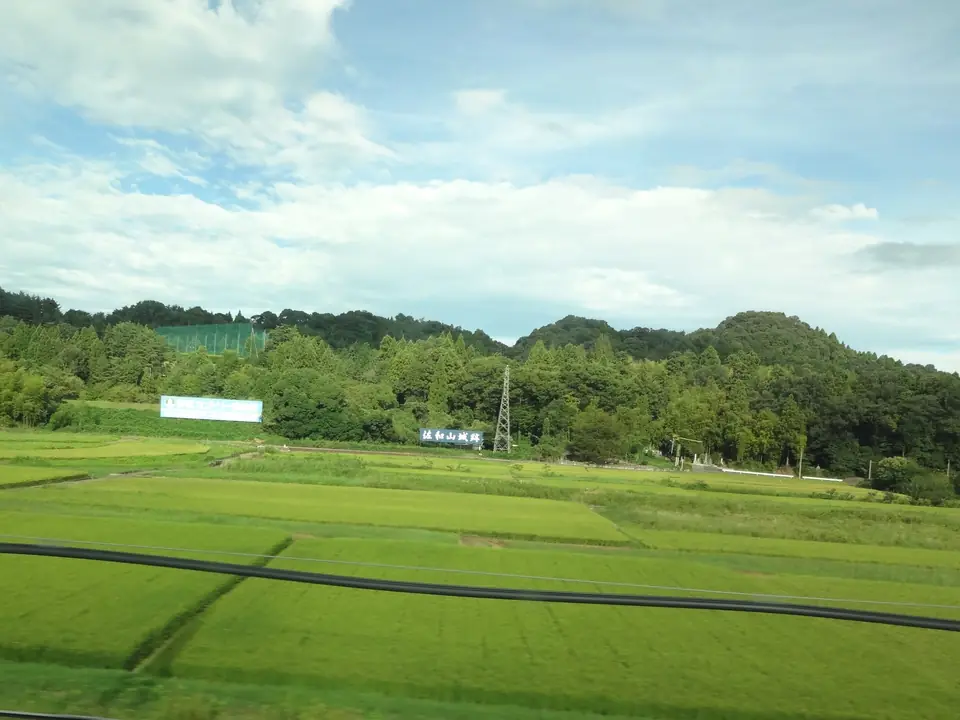
From the sign to the castle hill
Between Maibara and Kyoto, a sign and hill mark Sawayama Castle Ruins on the Seat E side. No keep remains; the sign helps you identify the hill where the castle stood.
Kannonji Castle Ruins
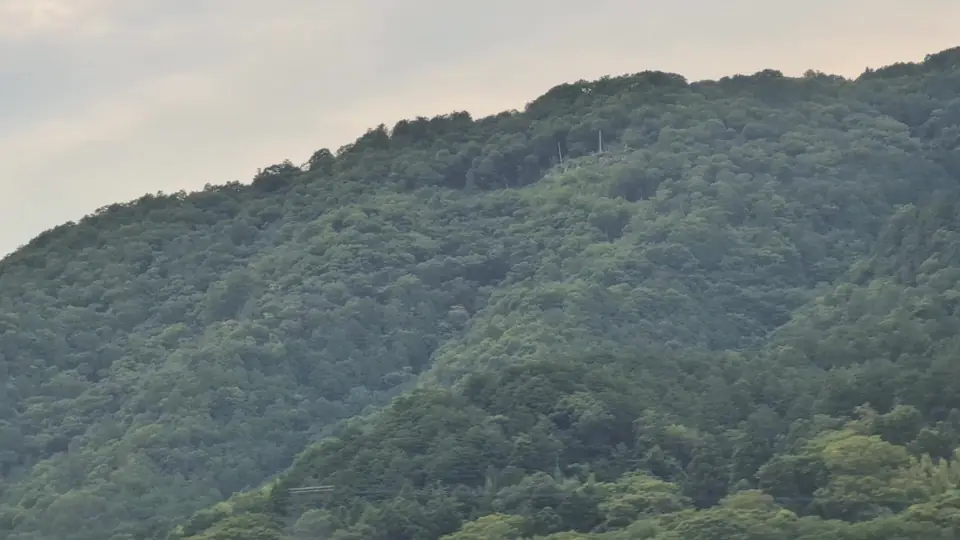
The ridge is the castle view
Kannonji Castle Ruins lie between Maibara and Kyoto. This is a view of the Kinugasa ridge where the castle stood, rather than a keep. Watch the Seat E side for a large mountain just before Azuchi.
WEST OF SHIN-OSAKA
West of Shin-Osaka — castles on the Sanyo Shinkansen
Our window guide stops at Shin-Osaka, but the castles do not. These two come from a rider who posted what passed the window.
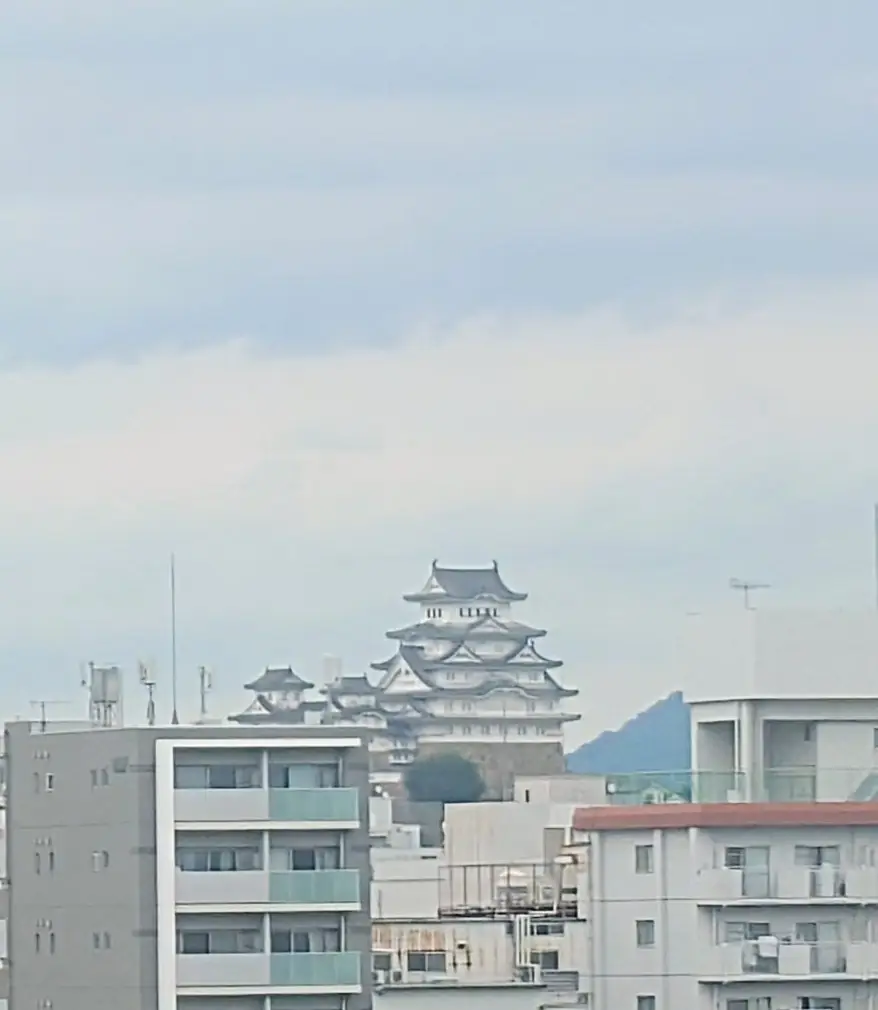
Himeji Castle
White tiers above the rooftops
Himeji keeps the tower Ikeda Terumasa completed in 1609, never lost to fire or war. Its white plaster walls earned it the name White Heron Castle; it became a National Treasure in 1951 and one of Japan's first World Heritage sites in 1993. The main keep is linked to three smaller keeps by covered bridges, which is why it reads as layers rather than a single tower.
The line passes south of the castle, so the keep appears through the north-facing windows, beyond the rooftops. Buildings hide it for much of the approach: start watching before the train reaches the station.
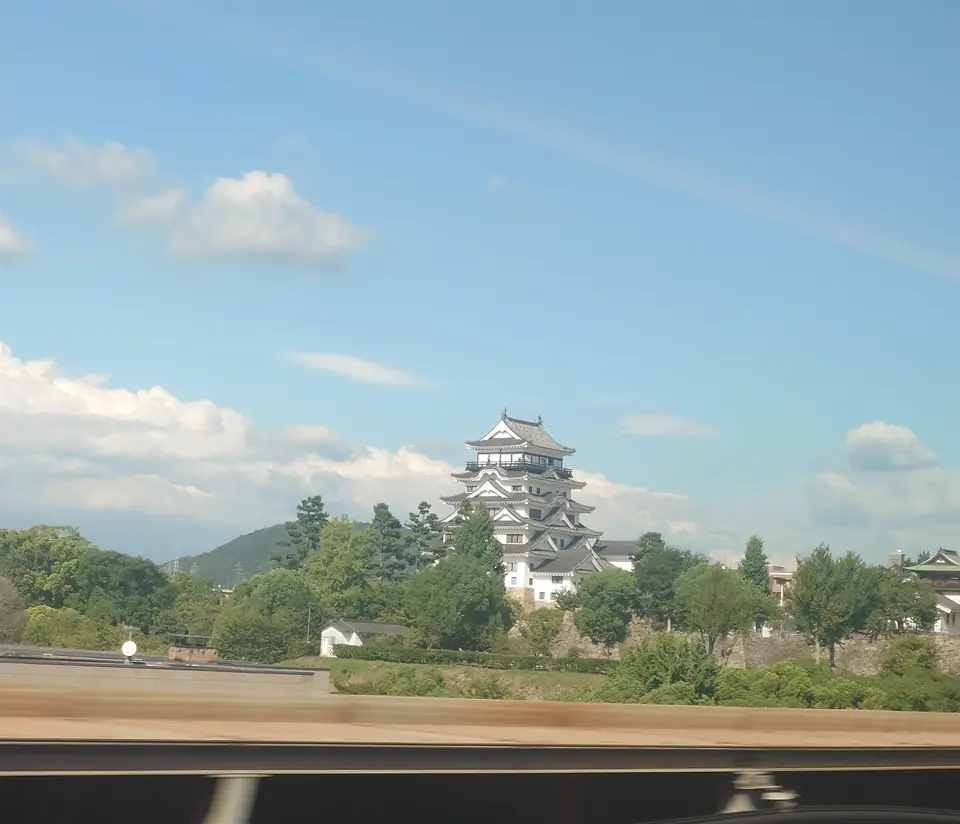
Fukuyama Castle
A keep right next to the tracks
Mizuno Katsunari built Fukuyama in 1622. The keep burned in an air raid in 1945 and was rebuilt in 1966; work for the castle's 400th anniversary in 2022 restored the iron plating on its north wall, said to be the only keep in Japan armoured that way. From the train you see the white south face, with the iron side turned away. The Fushimi Turret beside it is an original building, moved here from Fushimi Castle in Kyoto.
The keep stands just north of Fukuyama Station, unusually close to the line. It comes up fast from behind the trees, on top of its stone wall, and passes just as fast.
ANOTHER CASTLE-SHAPED VIEW
A castle-shaped landmark in Atami
On the Seat A side between Odawara and Atami, look for Atami Castle. It is a tourist attraction built in 1959, rather than a historic fortress. Look for its white silhouette among the sea and hills.
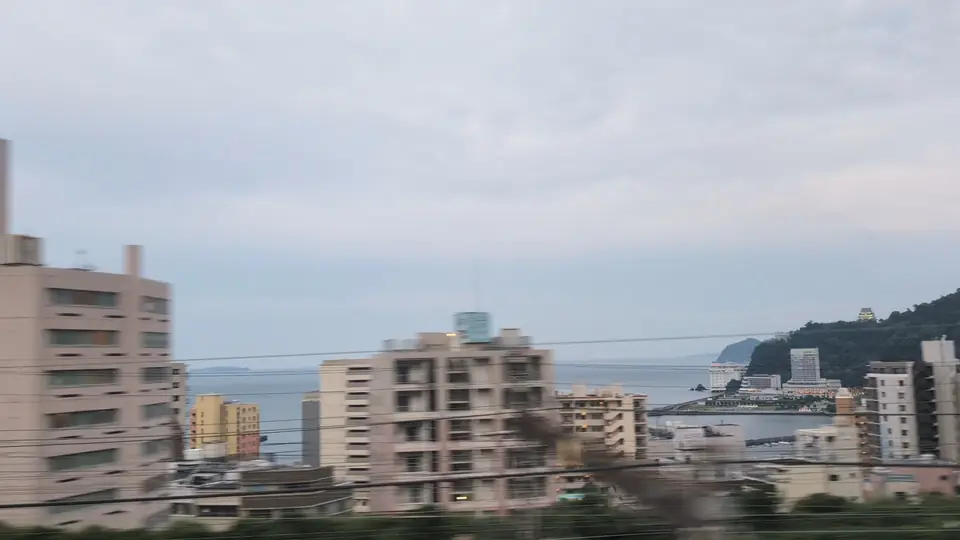
A CASTLE YOU CAN NO LONGER SEE
Nagoya Castle is no longer visible
Nagoya Castle once appeared between the buildings on the Seat E side, around Nagoya Station. A blog that has tracked castles from the train describes it just after a westbound train leaves Nagoya, near Noritake Garden: about 2.1 km away, and visible for less than a second.
A later note on the same article reports that the castle can no longer be seen from near Nagoya Station. In our own photograph from May 2026 below, the mall and other buildings now block the direction where it stood.
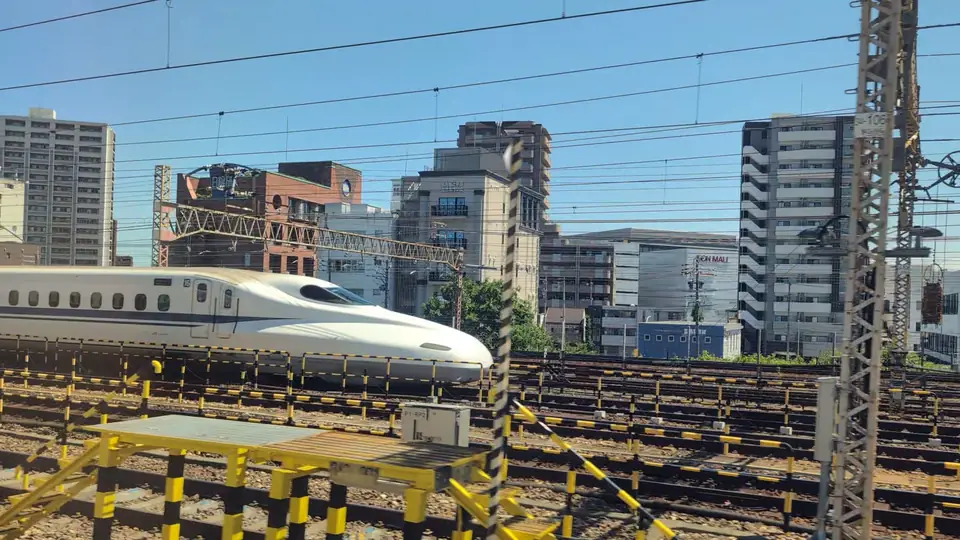
The blog account of Nagoya Castle from the window (Japanese) ↗
HOW TO LOOK
How to find them from your seat
- Seat A for Odawara, Seat E for most othersSeat letters refer to ordinary cars. Toward Tokyo the order reverses, but the seat side for each castle stays the same.
- Start close, then go distantKiyosu stands right by the tracks and makes a good first castle. Gifu and Hikone are distant, tiny even in clear air.
- For ruins, watch the hillSawayama and Kannonji have no keep. These views are of the hills and ridges where the castles once stood.
Look for them on your next ride
Choose your train for estimated passing times. Record the castles you spot in your Window Stamps to grow the Castle Hunter medal.