Where does your train go dark?
Sunset moves by more than an hour across the year. In December it is already dark before Odawara; in July it is still light past Nagoya. For the Tokaido Shinkansen between Tokyo and Shin-Osaka, choose your date and train.
Passing times are estimates from your train's published timetable, including its station stops. Any delay will shift them. Sunset is a simplified calculation averaged along the Tokaido corridor, and how bright the sky actually looks also depends on the weather.
TONIGHT'S COLOUR
What colour is it tonight — nightly illuminations
Two views whose lighting changes from day to day. Take the same train a week later and the colour is different.
Tokyo Tower
Its colour is decided for the day
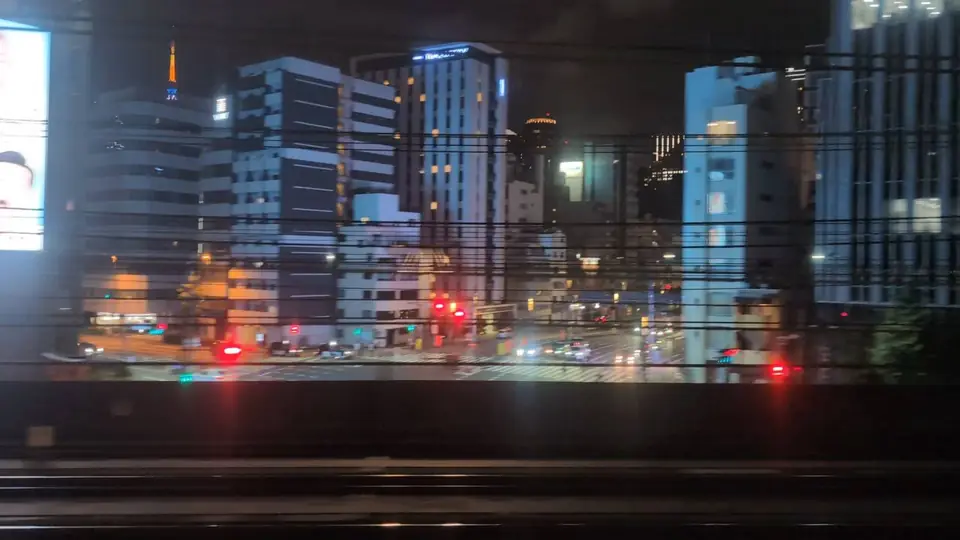
Three minutes out of Tokyo Station, a red tower stands in a gap between the buildings.
Tokyo Tower is not lit the same way every night. The standard “Landmark Light” is white in summer and a warm amber in winter, and on anniversaries and event days the “Diamond Veil” turns it pink, blue or rainbow. The colour depends on the day you travel — the first view on this page that belongs only to tonight.
It comes while you are still stowing your bag. Decide before you board that you will look right as soon as you sit down, or you will miss it.
Odawara Castle
Its colour is decided for the day
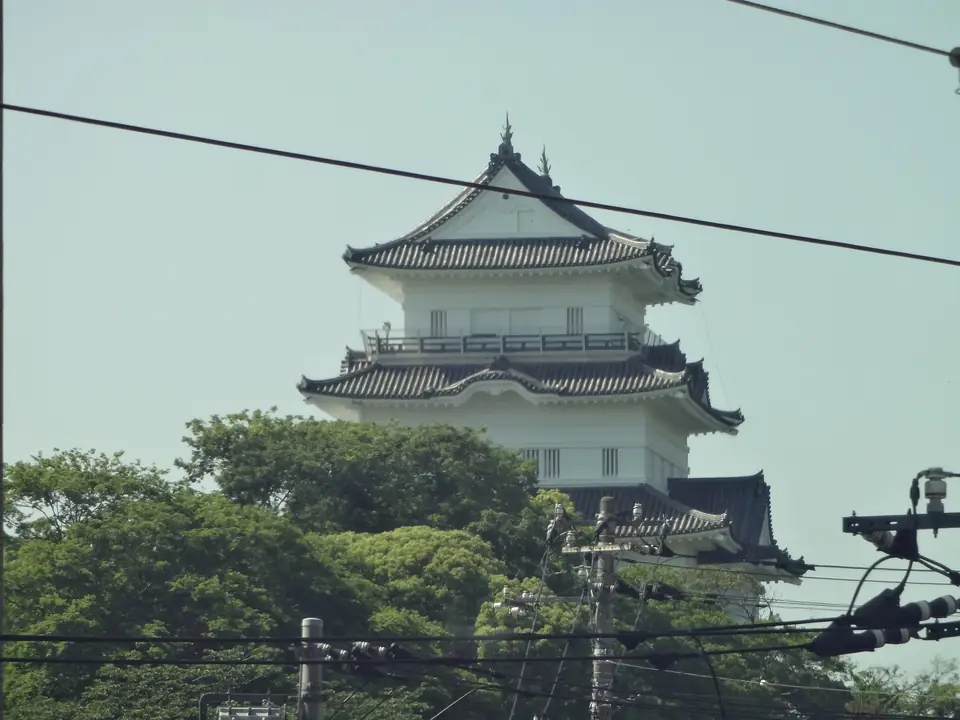
According to the castle's own guide, the Odawara Castle keep is lit every evening from sunset until 21:00. On top of that there is a “colour light-up” tied to awareness campaigns, and the schedule for each month is published on the official site.
So, like Tokyo Tower, its colour is already decided for the night you travel — but this one is on the Seat A side. In the first thirty minutes out of Tokyo you pass a colour-of-the-day building on your right, then another on your left.
Odawara Castle official site (colour light-up schedule, Japanese)
SEASONAL LIGHT-UP
If your timing is right — seasonal illuminations
These keeps and the pagoda are not lit every night. They come on for a season or an event, and the dates move each year, so each one links to its official information.
Kiyosu Castle
Lit only in season
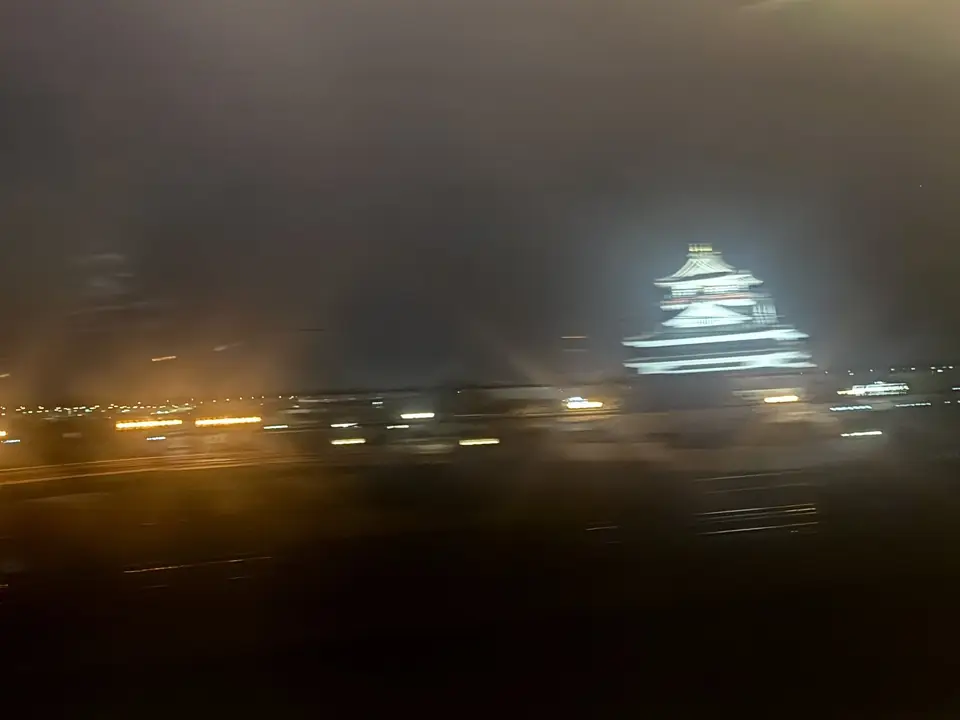
Just after Nagoya, a vermilion keep stands beside the Gojo River. It is close to the track and easy to spot even in daylight.
The night light-up is not year-round: it runs during the winter “Kiyosu Illumi” and the spring cherry blossom festival. Dates move from year to year, so check the official information before you count on it.
Kakegawa Castle
White above the town when it is lit
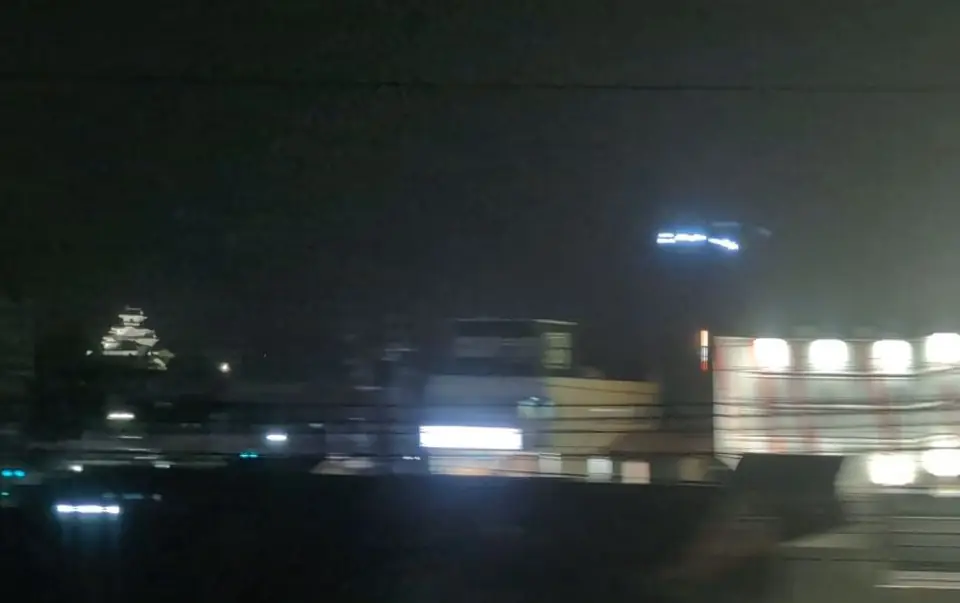
Kakegawa Castle stands very close to the track and is one of the clearest daytime views on the route. For the evening, what we could confirm are limited-period light-ups: the Kakegawa cherry blossom season from late February to mid-March, and a blue illumination during Water Week in early August.
Separately, we saw the keep lit from a westbound train on the night of 11 September 2026 (the photo above). Whether it is lit every night year-round is still unconfirmed by a primary source, so check the official site before counting on it.
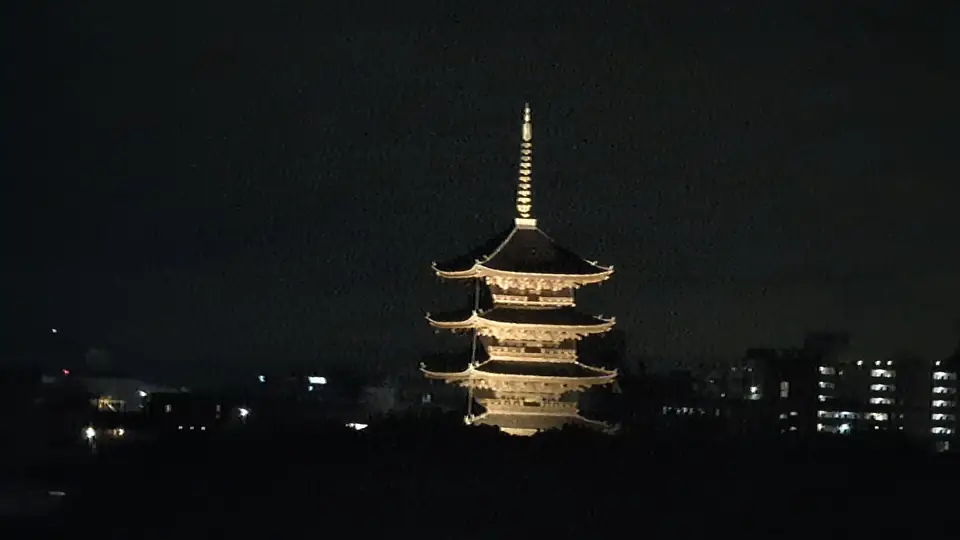
To-ji's five-story pagoda
Gold above the city, just before Kyoto
The one silhouette that tells you instantly you have reached Kyoto. After dark it carries a gold light and sits a level above the surrounding streets. Start watching the Seat A side before Kyoto Station.
Night viewing of the Kondo and Kodo halls runs only in spring and autumn, but from the train on 6 September 2026 the pagoda was lit outside those periods. Check the official site for dates and hours.
SEA OF LIGHTS
A sea of lights — city night views
Stretches where the city itself becomes the view. Buildings by day; by night, a count of lit windows.
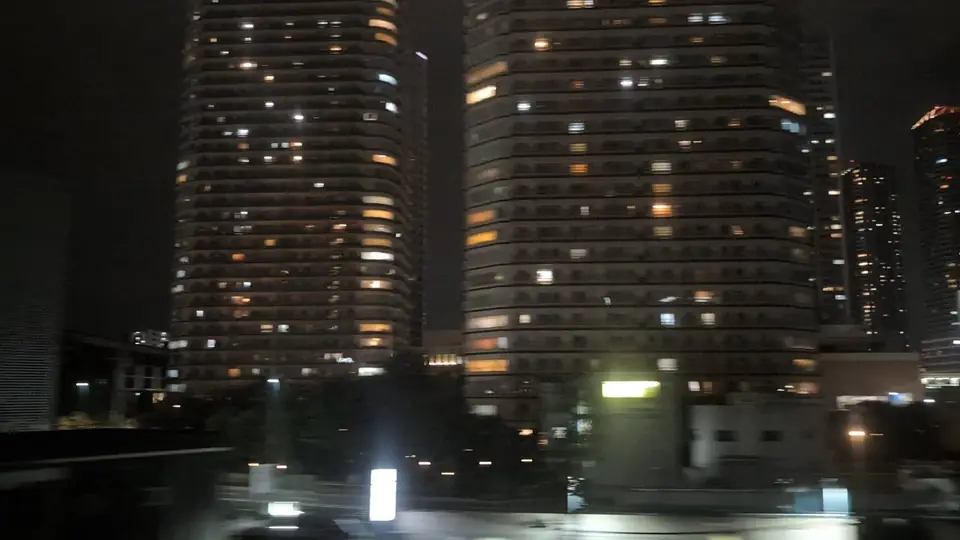
Musashi-Kosugi towers
Window lights, stacked
Just after the river, a cluster of residential towers closes in. By day they are a grey mass; at night each lit window stacks into a vertical grid.
Count them as households rather than windows and the same buildings look completely different.
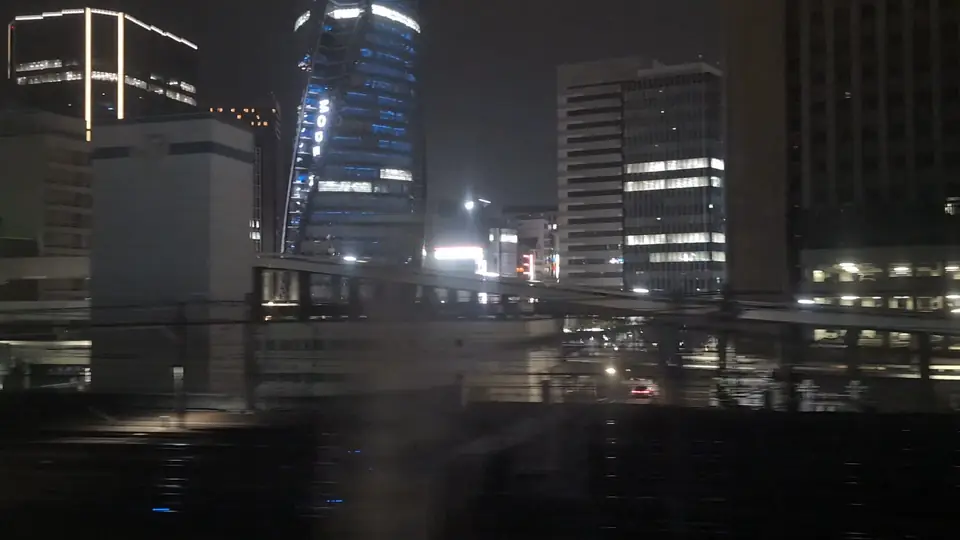
The Nagoya Station skyline
A block of light, closing in
On the approach to Nagoya, the towers around the station arrive as one solid block of light. Because the train is already slowing, you get longer with it than with the skylines before Tokyo or Shin-Osaka.
It lands exactly when people start standing up. It is worth staying in your seat one more minute.
BETTER AFTER DARK
Better after dark — the night views nobody lists
Not scenic night views. Things you slide past without noticing in daylight, which become the main event once it is dark.
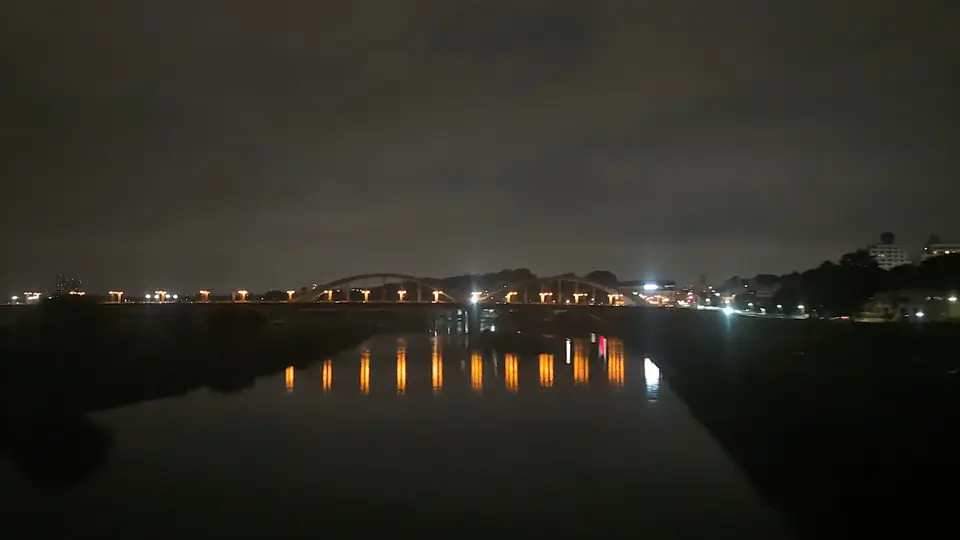
Maruko Bridge
Lights strung across the Tama River
For the few seconds you are over the Tama River, the bridge lights run downstream in a single line. By day it is a river and a bridge; at night only the line of light is left.
Nothing is built on the water, so this is one of the most open views on the whole route.
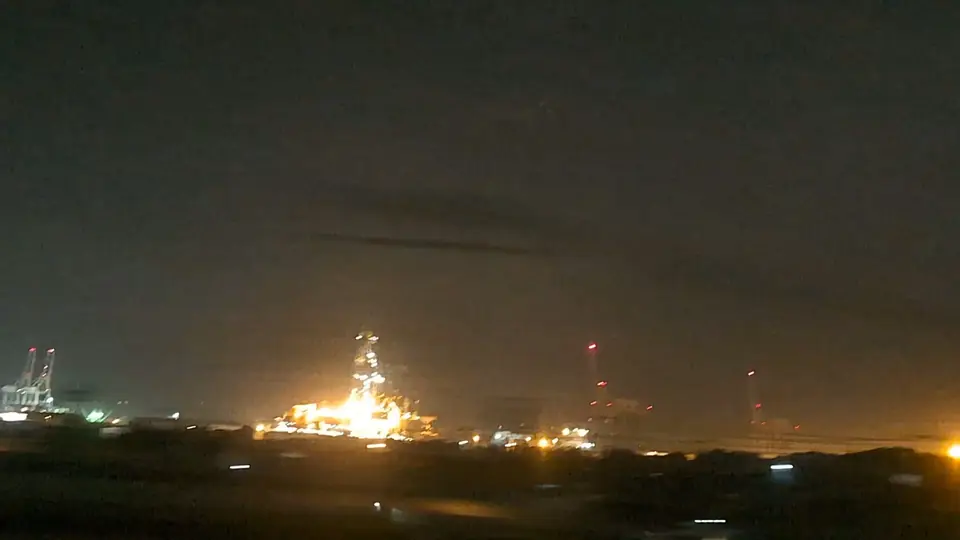
Shimizu Port and CHIKYU
A working harbour, still lit
Far out on the sea side, the harbour lights gather into one patch. If the deep-sea drilling vessel CHIKYU is in port, its derrick sometimes reads as a thin column of light.
This is not a scenic night view. It is the glow of a place that is still working.
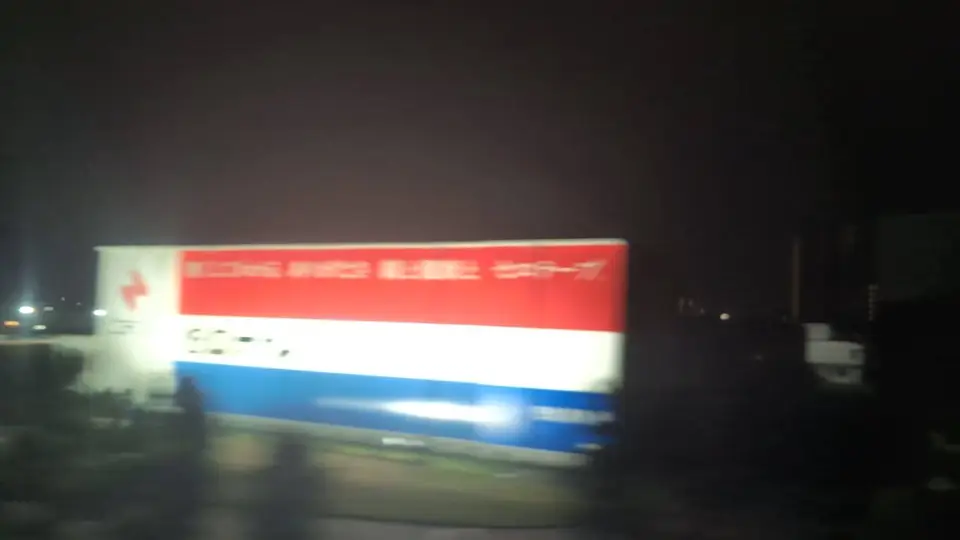
The CELLOTAPE wall sign
Easier to find after dark
A large sign painted on a factory wall. In daylight it slides past as part of the building; at night it is lit, and only the letters float in the dark.
One of the very few views on this route that is easier to catch at night than by day.
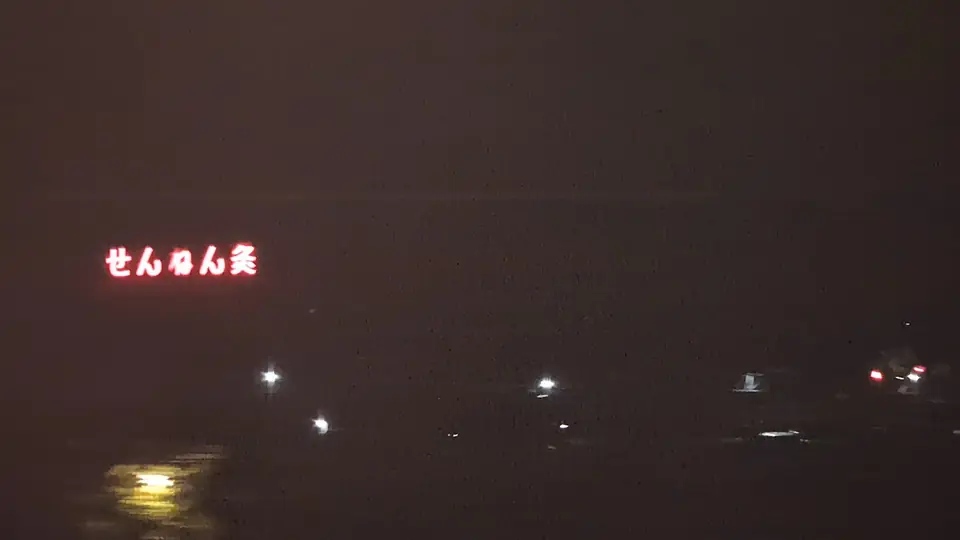
The Sennen Kyu sign
Red letters on a dark hillside
Around Maibara, the characters for Sennen Kyu stand along the hillside on the Seat A side. By day it is a white board; at night only the red letters are left.
It was lit on the nights of both 6 and 11 September 2026. The sign is its own light source, which puts it among the views that are easier to catch after dark.
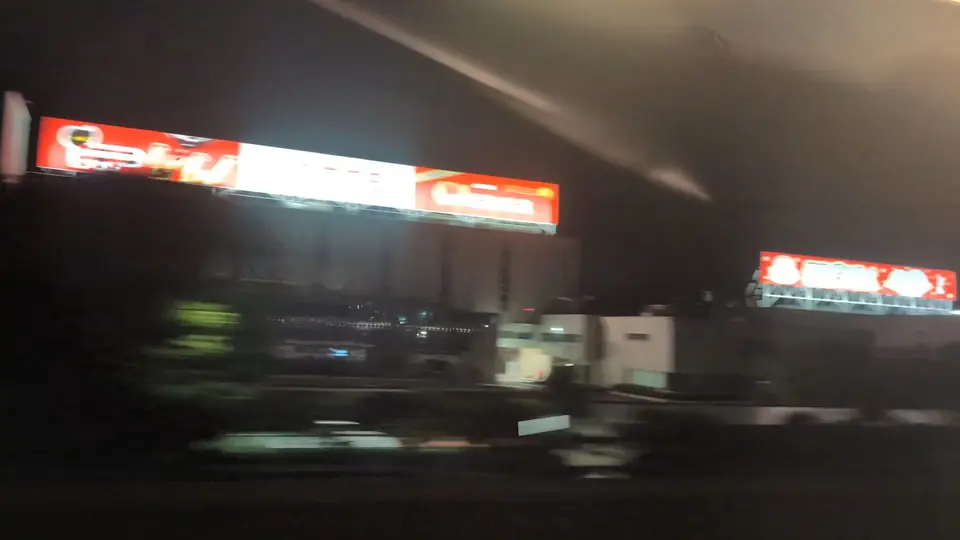
The Lotte Shiga sweets signs
Factory signs that stay bright
Past Maibara toward Kyoto, a run of billboards for Yukimi Daifuku and other sweets lines the Seat A side. They belong to the factory, so they stay lit and the names remain readable as they pass.
Reading them one by one does not work at this speed. Follow them as a run of colours and shapes instead.
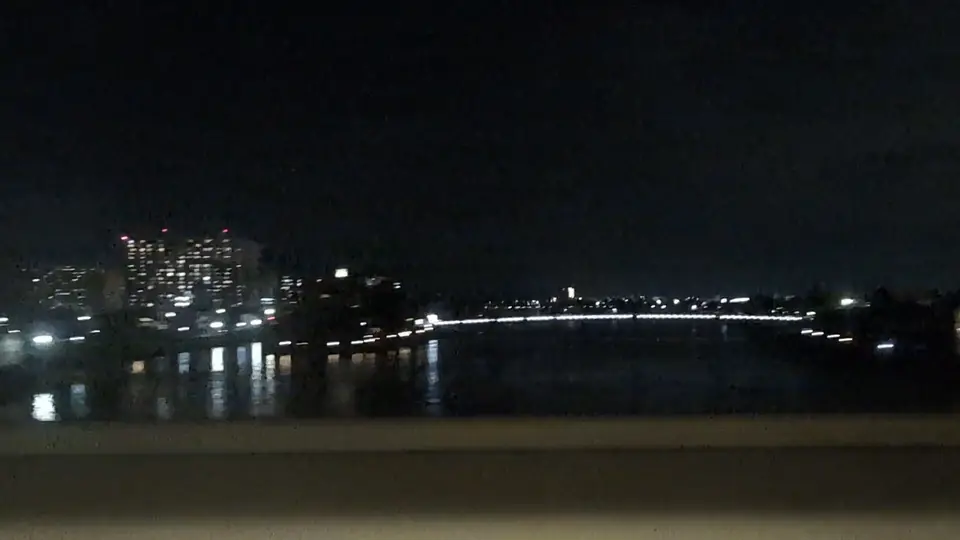
Seta no Karahashi
Light falling on water
In the instant you cross the Seta River, you get the bridge lights and their reflection on the water at once.
This is the bridge of the old saying, “hold the Karahashi and you hold the country”. At night the history matters less than how still the water is.
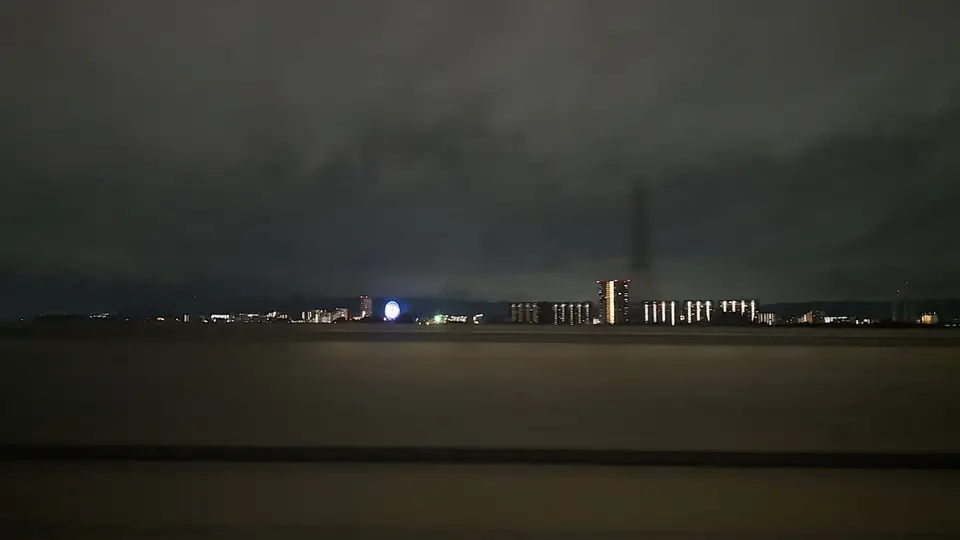
The Hirakata Park ferris wheel
A bare frame by day, a ring of light at night
After Kyoto, once you are past Takatsuki, a single ring rises just above the rooftops on the Seat A side. It is Sky Walker, 80 m at the top, about 2.3 km from the track.
By day it is a pale frame and easy to miss; lit, the ring reads as a ring, so your odds are better after dark. The park's Hikari no Yuenchi illumination runs November to April, but the wheel was still glowing from the train on 6 September 2026. Check the official site for lighting hours.
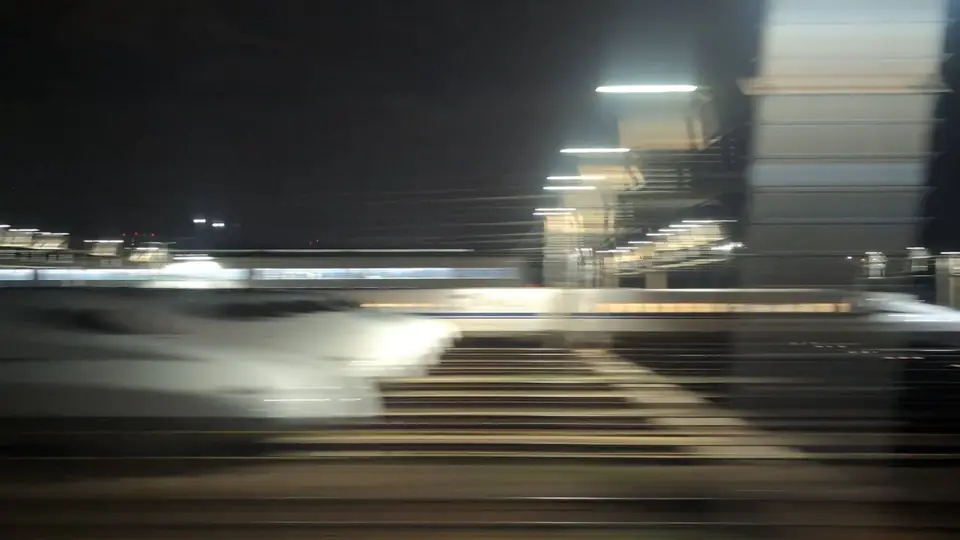
Torikai rolling stock depot
A row of sleeping trains
Before Shin-Osaka, rows of Shinkansen sit parked in the depot. Under the floodlights the white bodies line up with a weight they never have in daylight.
The same train you are riding, resting in the light. There is no better thing to see at the end of a journey.
How to see night views through the window
This is the most useful part of the page.
- Your enemy is the cabin light, not the distanceAlmost every time you cannot see out at night, the cause is the cabin lighting reflecting off the glass, not the darkness outside. The window is behaving like a mirror. Cup your face and both hands against it to make a patch of shadow, give your eyes a few seconds, and the outside appears. You can do it from your seat without anyone noticing.
- Make shade rather than hunt for a dark seatCabin lights stay on. Making shade at the window you already have is faster and more reliable than moving to find a darker seat.
- To film it, press the lens flat against the glassThe further your phone is from the window, the more cabin light lands in the shot. Holding the lens directly against the glass removes almost all of it. Night video from a moving train still blurs easily, so watch with your eyes first.
- One side is dark, the other is notOnce you are past the built-up areas, it is common for one side of the train to be completely black. Seat E and Seat A see different things, so check the side column in the tool above.
About what is shown here
Light-up dates, hours and colours change from year to year. This page does not state dates; it links to each site's official information instead. Please check there before you travel.
For Odawara Castle and Kakegawa Castle we do not yet have a night photo taken from the train, so a daytime photo is shown. A castle being lit and a castle being visible from a moving Shinkansen are two different claims, and we only make the first. If you have a night shot from the window, we would be glad to hear from you.
The Kiyosu Castle photo is used with permission from @asami_k920, and the Odawara Castle photo from the Shinkansen window blog. The rest are our own. Passing times and sunset are both estimates, and what you actually see depends on the train, the weather and where you are sitting.